A scholarship essay can quietly decide your future.
That sounds dramatic.
But it’s true.
Two students may have similar grades. Similar certificates. Similar achievements.
Yet one gets selected.
The other receives a rejection email.
Very often, the deciding factor is the essay.
Scholarship committees don’t just invest in academic performance.
They invest in people.
Your essay is where they discover your personality, struggles, dreams, values, leadership potential, and mindset.
And here’s where many students get it wrong.
They write essays that sound impressive… but emotionally empty.
Long grammar. Big vocabulary. Generic motivation.
No real connection.
This guide will show you how to write a scholarship essay that feels authentic, memorable, and persuasive without sounding robotic.
👉CLICK HERE TO SEE HOW TO APPLY NOW
Why Scholarship Essays Matter So Much
Imagine reviewing 5,000 applications.
Every applicant claims to be hardworking. Every applicant claims to be passionate. Every applicant claims to deserve the opportunity.
After a while, everything starts sounding the same.
That’s why storytelling matters.
Selection panels remember stories.
Not recycled motivational phrases.
What Scholarship Committees Actually Look For
Most students focus too heavily on “trying to sound smart.”
That’s rarely the main goal.
Committees usually look for:
- Authenticity
- Leadership potential
- Personal growth
- Community impact
- Clear goals
- Strong communication
They want students who will create meaningful impact after graduation.
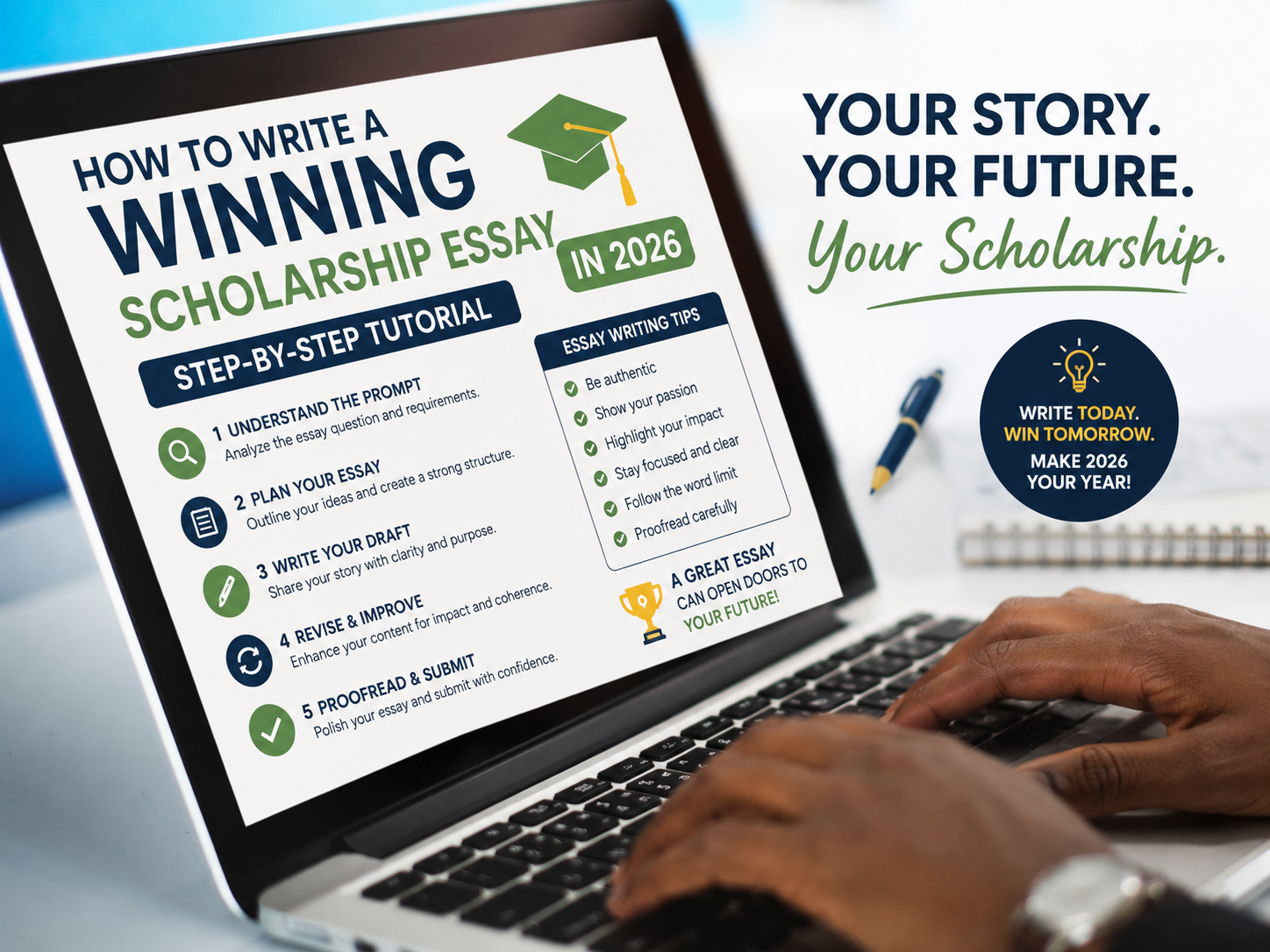
Step 1: Understand the Essay Prompt Properly
This sounds basic.
But it’s where many essays fail immediately.
If the prompt asks about leadership, don’t spend 80% of your essay discussing childhood poverty.
Answer the exact question.
Common scholarship essay prompts include:
- Tell us about yourself
- Describe a challenge you overcame
- Why do you deserve this scholarship?
- Explain your career goals
- How will you impact your community?
Read the prompt multiple times before writing.
Step 2: Start With a Powerful Hook
The opening paragraph matters more than people realize.
Most essays begin like this:
“Education is important to me because…”
That’s forgettable.
A strong hook creates curiosity.
Weak Opening
“I have always wanted to study abroad.”
Better Opening
“The night our electricity failed during my final exams, I studied under a streetlight beside a noisy roadside shop.”
See the difference?
The second version creates imagery and emotional engagement instantly.
Step 3: Use Real Stories Instead of Generic Claims
Don’t just say you’re hardworking.
Show it.
Don’t say you’re resilient.
Demonstrate it.
Stories create emotional proof.
Example
Instead of saying:
“I am passionate about helping people.”
Try:
“After watching my younger brother struggle to access basic medical care in our village, I became determined to study public health.”
Specific stories feel human.
Step 4: Keep Your Essay Personal
One major mistake students make is trying to sound overly formal.
Scholarship essays are not academic journals.
Write naturally.
Your personality should appear on the page.
That doesn’t mean being careless.
It means sounding real.
Step 5: Focus on Transformation
Great essays often follow a transformation arc.
Something changed you.
Maybe:
- Financial struggles shaped your ambition
- Volunteering changed your career direction
- A failure taught you resilience
- Family challenges built determination
Transformation creates emotional depth.
Step 6: Clearly Explain Your Goals
Scholarship committees invest in future impact.
They want to know:
- What do you plan to study?
- Why does it matter?
- How will you use your education?
Avoid vague goals.
Weak Goal
“I want to help people in the future.”
Stronger Goal
“I plan to establish affordable rural healthcare initiatives focused on maternal health access in underserved communities.”
Specificity builds credibility.
Step 7: Show Leadership and Initiative
Leadership doesn’t always mean holding titles.
You can demonstrate leadership through:
- Mentoring students
- Community volunteering
- Organizing projects
- Starting small initiatives
- Solving local problems
Even small actions matter.
Step 8: Avoid Common Scholarship Essay Mistakes
This section alone can save many applications.
Mistake 1: Writing Generic Essays
If your essay could belong to anybody, it won’t stand out.
Mistake 2: Overusing Big Vocabulary
Complex grammar does not guarantee impact.
Clarity wins.
Mistake 3: Sounding Robotic
Avoid stiff academic language everywhere.
Mistake 4: Ignoring Word Limits
Respect instructions.
Always.
Mistake 5: Submitting Without Editing
Typos and awkward sentences damage credibility.
Recommended Scholarship Essay Structure
Here’s a simple structure that works well.
Introduction
Hook the reader emotionally.
Background Story
Explain your experiences and challenges.
Academic and Career Goals
Discuss what you want to achieve.
Why This Scholarship Matters
Connect the scholarship to your future plans.
Conclusion
End with confidence and vision.
Example Scholarship Essay Introduction
“Growing up in a community where students frequently abandoned school because of financial hardship changed how I viewed education. I watched talented classmates disappear from classrooms one after another, not because they lacked intelligence, but because opportunity never reached them. That reality shaped my determination to pursue education not only for personal growth, but to help expand access for others facing similar challenges.”
That type of opening feels personal and emotionally grounded.
How Long Should a Scholarship Essay Be?
Always follow the official instructions.
But generally:
- Short essays: 250–500 words
- Standard essays: 500–1,000 words
- Long essays: 1,000+ words
Never add unnecessary filler.
Scholarship Essay Editing Checklist
Before submitting your essay, review:
- Grammar and spelling
- Clarity
- Emotional impact
- Story flow
- Word count
- Repetition
- Authenticity
Then read it aloud.
You’ll notice awkward sections faster.
Can You Use AI to Write Scholarship Essays?
This question keeps coming up.
AI tools can help with brainstorming and editing.
But relying entirely on AI-generated essays is risky.
Why?
Because many scholarship committees now recognize robotic writing patterns.
Emotionally empty essays rarely stand out.
Use AI carefully.
Your real experiences should remain the foundation.
Sample Scholarship Essay Topics You Can Practice
Here are common topics worth practicing:
- Leadership experiences
- Overcoming adversity
- Career ambitions
- Community impact
- Academic motivation
- Personal growth
Practicing multiple essay styles improves confidence.
Final Thoughts
A scholarship essay is not about pretending to be perfect.
It’s about helping selection panels understand who you are beyond grades and certificates.
Authenticity matters.
Stories matter.
Clarity matters.
And surprisingly, honesty often matters more than trying to sound extraordinary.
Your experiences, even the difficult ones may become the exact reason a scholarship committee remembers your application.