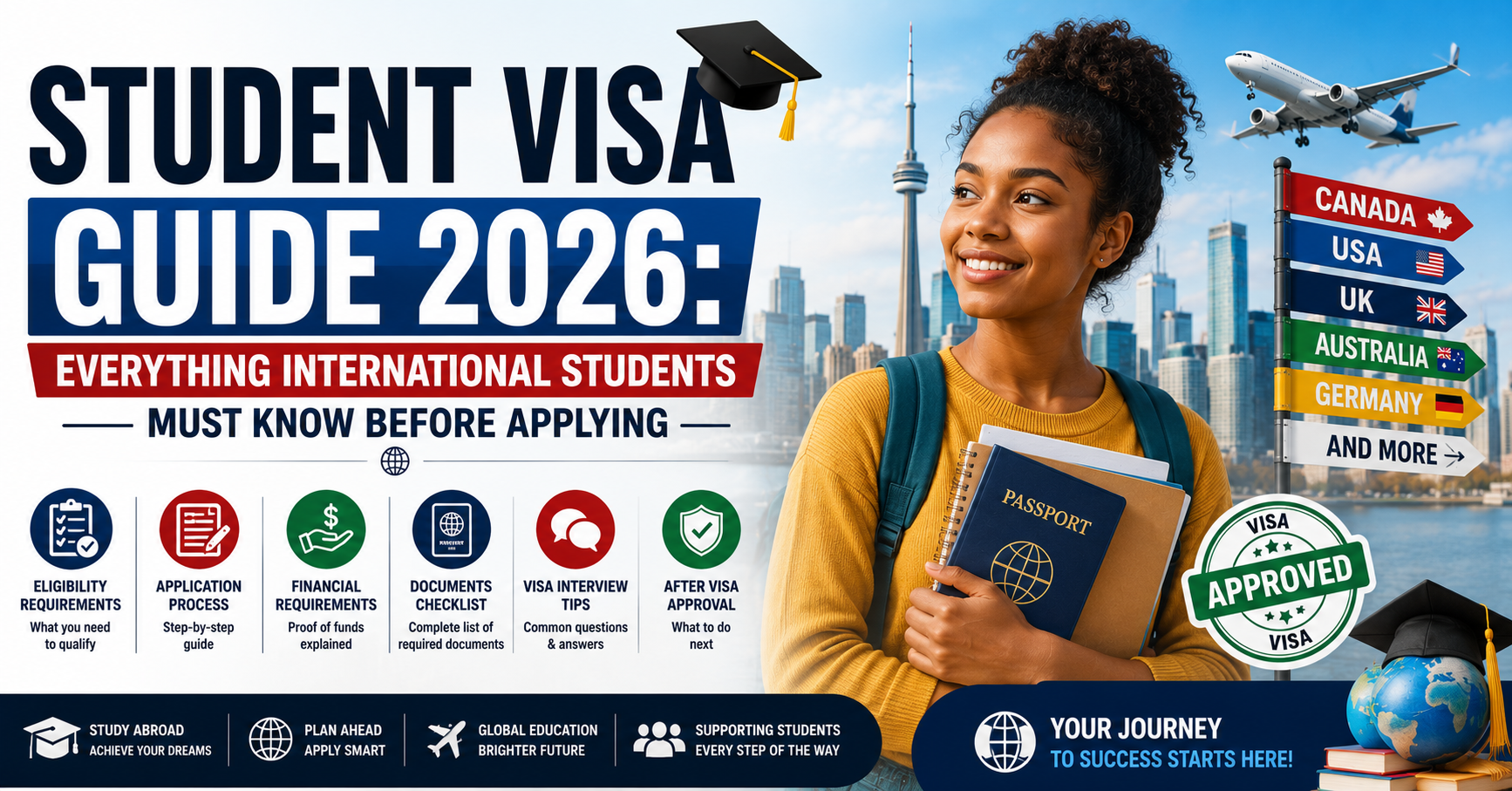
Getting accepted into a university abroad is exciting.
For many students, receiving an admission letter feels like crossing the finish line after months of applications, essays, document submissions, and waiting.
But here’s the truth many first-time applicants discover:
The admission letter is only half the journey.
The next major hurdle is securing a student visa.
Every year, thousands of qualified students lose study opportunities because they misunderstand visa requirements, submit incomplete applications, fail interviews, or miss important deadlines.
The unfortunate reality is that receiving university admission does not automatically guarantee visa approval.
Immigration officers want evidence that you are a genuine student, financially prepared, academically qualified, and capable of complying with visa conditions.
The good news?
Most student visa refusals can be avoided with proper preparation.
This comprehensive guide explains everything international students need to know about student visas in 2026, including requirements, application processes, common mistakes, financial proof, interviews, and practical strategies that improve approval chances.
What Is a Student Visa?
A student visa is an official authorization that allows foreign nationals to enter another country for educational purposes.
Unlike tourist visas, student visas are specifically designed for individuals enrolled in approved academic institutions.
Student visas often permit:
• Full-time study
• Limited work opportunities
• Access to student services
• Extended stays during academic programs
Requirements vary depending on the destination country.
Why Student Visas Matter
Many students focus almost entirely on university admission.
That can be risky.
Immigration authorities evaluate applicants separately from universities.
A university may approve your academic qualifications.
The visa office must approve your immigration eligibility.
This means both approvals are necessary before traveling.
Most Popular Study Destinations in 2026
Several countries continue attracting large numbers of international students.
Canada
Known for high-quality education and post-graduation opportunities.
Popular Institutions
• University of Toronto
• University of British Columbia
• McGill University
• University of Alberta
United Kingdom
A global education hub offering internationally recognized qualifications.
Popular Institutions
• University of Oxford
• University of Cambridge
• Imperial College London
• University College London
Australia
Offers strong academic programs and attractive work opportunities.
Popular Institutions
• University of Melbourne
• Australian National University
• University of Sydney
• Monash University
Germany
Known for affordable education and strong engineering programs.
Popular Institutions
• Technical University of Munich
• Heidelberg University
• RWTH Aachen University
United States
Home to many of the world’s highest-ranked universities.
Popular Institutions
• Harvard University
• Stanford University
• Massachusetts Institute of Technology
• Yale University
Basic Student Visa Requirements
Although requirements differ by country, most applications require similar documentation.
Valid Passport
Your passport should remain valid throughout your intended study period.
University Admission Letter
This document confirms acceptance into an approved institution.
Financial Evidence
Applicants must demonstrate sufficient funds to cover:
• Tuition fees
• Living expenses
• Accommodation
• Travel costs
Academic Records
These may include:
• Transcripts
• Certificates
• Degrees
• Diplomas
Medical Requirements
Some countries require:
• Medical examinations
• Vaccination records
• Health insurance coverage
Police Clearance Certificates
Applicants may need to demonstrate good character and legal compliance.
Proof of English Proficiency
Examples include:
• IELTS
• TOEFL
• PTE
• Duolingo
• Alternative language requirements accepted by institutions
How Immigration Officers Evaluate Applications
Many applicants believe approval depends solely on documents.
In reality, immigration officers evaluate the entire application.
Key factors include:
Academic Intentions
Do your educational goals make sense?
Financial Stability
Can you realistically afford your studies?
Immigration Compliance
Are you likely to respect visa conditions?
Academic Background
Does your previous education align with your proposed program?
Personal Circumstances
Do your plans appear genuine and credible?
Strong applications present a consistent story.
Weak applications often contain contradictions or unexplained gaps.
Proof of Funds: One of the Most Important Requirements
Financial documentation remains one of the most scrutinized areas of student visa applications.
Immigration officers want reassurance that students can support themselves without violating visa conditions.
Commonly Accepted Financial Evidence
• Bank statements
• Sponsorship letters
• Scholarship awards
• Education loan approvals
• Fixed deposits
• Financial guarantees
The amount required varies significantly by destination.
Canada
Students must demonstrate access to tuition funds and living expenses.
United Kingdom
Financial requirements depend on tuition and location.
Australia
Applicants must satisfy financial capacity requirements established by immigration authorities.
Germany
Many students use blocked accounts to demonstrate financial readiness.
Student Visa Application Process: Step-by-Step
Step 1: Secure Admission
Obtain an official offer or acceptance letter from a recognized institution.
Step 2: Prepare Required Documents
Organize all documentation carefully.
Avoid last-minute preparation.
Step 3: Pay Applicable Fees
Visa application fees vary by country.
Step 4: Complete Application Forms
Ensure accuracy and consistency.
Errors can cause delays or refusals.
Step 5: Schedule Biometrics
Many countries require fingerprints and photographs.
Step 6: Attend Interviews (If Required)
Some destinations require visa interviews.
Step 7: Wait for Processing
Processing times vary based on country, season, and application volume.
Countries With the Highest Student Visa Approval Rates
While approval depends largely on applicant quality, some destinations maintain relatively favorable student visa environments.
Popular choices include:
• Canada
• Germany
• Ireland
• Australia
• New Zealand
• Netherlands
Applicants should focus on meeting requirements rather than chasing approval statistics.
How Long Does Student Visa Processing Take?
Timing matters.
Applying too late can create unnecessary stress.
Typical processing periods range from:
• Several weeks
• Several months
• Longer during peak admission seasons
Submitting applications early is one of the simplest ways to avoid complications.
Can Students Work While Studying?
One reason many students choose international education is the opportunity to gain work experience.
Many countries permit limited employment during studies.
Common Benefits
• Additional income
• Professional experience
• Networking opportunities
• Career development
However, work authorization rules vary significantly and should always be reviewed carefully.
Student Visa Interview Questions and How to Answer Them
For many applicants, the visa interview is the most nerve-racking part of the entire process.
The truth is that immigration officers are not trying to trick you.
Their goal is to determine whether you are a genuine student with realistic academic and financial plans.
Here are some common questions you may encounter.
Why did you choose this university?
Avoid generic answers.
Instead, discuss:
• Specific academic programs
• Research opportunities
• Faculty expertise
• Career relevance
Example:
“I selected this university because of its strong reputation in Computer Science and its industry partnerships, which align with my long-term career goals.”
Why do you want to study this course?
Your answer should demonstrate a logical connection between:
• Previous education
• Professional experience
• Future career objectives
Who is sponsoring your education?
Be prepared to explain:
• Personal savings
• Family sponsorship
• Scholarship funding
• Education loans
What are your plans after graduation?
Immigration officers want to see that your educational plans are realistic and purposeful.
Focus on:
• Career development
• Professional goals
• Industry opportunities
How will you support yourself while studying?
Provide clear, evidence-based answers supported by financial documentation.
Common Reasons Student Visas Are Refused
Understanding why applications fail can help you avoid costly mistakes.
Insufficient Financial Evidence
This remains one of the most common refusal reasons worldwide.
Applicants must clearly demonstrate access to sufficient funds.
Inconsistent Information
Contradictions between application forms, supporting documents, and interview responses can raise concerns.
Weak Statement of Purpose
A poorly written personal statement may fail to explain educational goals convincingly.
Questionable Academic Progression
Applications sometimes raise concerns when there is no logical connection between previous studies and the proposed program.
Incomplete Documentation
Missing paperwork frequently results in delays or outright refusals.
Lack of Genuine Student Intent
Immigration officers must be convinced that education is your primary objective.
How to Write a Strong Statement of Purpose (SOP)
Your Statement of Purpose is often one of the most influential documents in your application.
Think of it as your opportunity to tell your story.
A strong SOP should include:
Introduction
Explain your academic interests and motivations.
Academic Background
Discuss previous education and achievements.
Career Goals
Describe your professional aspirations.
Why This Program?
Explain how the chosen course supports your objectives.
Why This Country?
Discuss educational advantages and opportunities.
Future Plans
Demonstrate clear career direction.
Avoid copying samples from the internet.
Immigration officers and admissions teams frequently identify generic content.
Authenticity matters.
The Relationship Between Scholarships and Student Visas
Winning a scholarship can significantly strengthen your visa application.
Why?
Because scholarships help address one of the biggest concerns for immigration officers: financial capacity.
Benefits of Scholarship Funding
• Reduced financial risk
• Demonstrated academic excellence
• Enhanced application credibility
• Lower dependence on sponsors
Common scholarship sources include:
• Government-funded programs
• University scholarships
• International organizations
• Private foundations
Students receiving fully funded scholarships often have a stronger financial profile during visa assessment.
Health Insurance Requirements for International Students
Many countries require students to maintain health insurance coverage throughout their studies.
Health insurance protects students from unexpected medical expenses.
Examples include:
Canada
Requirements vary by province and institution.
Australia
International students are generally required to maintain Overseas Student Health Cover (OSHC).
Germany
Health insurance is typically mandatory for international students.
United Kingdom
Students often pay an immigration health surcharge as part of the visa process.
Always verify current requirements before applying.
Country-by-Country Student Visa Comparison
Canada
Strengths:
• Post-graduation work permits
• Immigration pathways
• High-quality education
Challenges:
• Financial requirements
• Competitive admissions
United Kingdom
Strengths:
• Globally recognized degrees
• Graduate Route work opportunities
Challenges:
• Higher living costs in some cities
Australia
Strengths:
• Strong labor market
• Student work opportunities
Challenges:
• Cost of living in major cities
Germany
Strengths:
• Affordable education
• Strong engineering and technical programs
Challenges:
• Language requirements for some programs
New Zealand
Strengths:
• Welcoming environment
• Quality education
Challenges:
• Geographic distance for some students
Netherlands
Strengths:
• Increasing number of English-taught programs
• Strong academic reputation
Challenges:
• Housing shortages in some regions
What Happens After Graduation?
One of the most important factors students consider is life after completing their studies.
Many countries now offer post-study work opportunities.
Canada
Graduates may qualify for post-graduation work permits depending on program eligibility.
United Kingdom
The Graduate Route allows eligible graduates to remain and work after completing studies.
Australia
Various post-study work options exist for eligible graduates.
Germany
Graduates often have opportunities to remain and search for employment.
These pathways make international education even more attractive.
Student Visa Checklist Before Submission
Use this checklist to reduce the likelihood of errors.
Documents Checklist
✓ Valid passport
✓ Admission letter
✓ Academic transcripts
✓ Degree certificates
✓ Passport photographs
✓ Financial evidence
✓ Scholarship documents (if applicable)
✓ Medical records (if required)
✓ Police clearance certificates (if required)
✓ Language proficiency results
✓ Completed application forms
✓ Health insurance documents
✓ Visa fee payment receipts
Double-check every document before submission.
Small mistakes can create significant delays.
Frequently Asked Questions
Can I apply for a student visa before receiving admission?
Generally, no.
Most countries require proof of admission before processing student visa applications.
Can a student visa be rejected even after university admission?
Yes.
University admission and visa approval are separate processes.
Do scholarships guarantee visa approval?
No.
However, scholarships can strengthen financial credibility.
Can family members accompany international students?
In some cases, yes.
Policies vary depending on country and visa category.
How much money do I need to show?
Requirements differ by destination, tuition fees, and living costs.
Always consult official immigration guidance.
How early should I apply?
Starting preparations 6–12 months before your intended intake is often advisable.
Final Thoughts: Preparation Is Your Biggest Advantage
A student visa application is not simply a collection of forms and documents.
It is a complete story about your educational goals, financial readiness, and future plans.
The strongest applicants are rarely the luckiest.
They are the most prepared.
They understand requirements.
They organize documents carefully.
They communicate their goals clearly.
They apply early.
And they avoid shortcuts.
If studying abroad is part of your dream, treat the visa process with the same seriousness you gave your university application.
Research thoroughly.
Prepare strategically.
Follow official guidance.
Present a genuine and credible application.
Thousands of international students successfully secure visas every year and begin life-changing educational journeys abroad.
There is no reason you cannot be one of them.
Your admission letter opens the door.
Your student visa helps you walk through it.
Start preparing today, and your international education journey could begin sooner than you think.