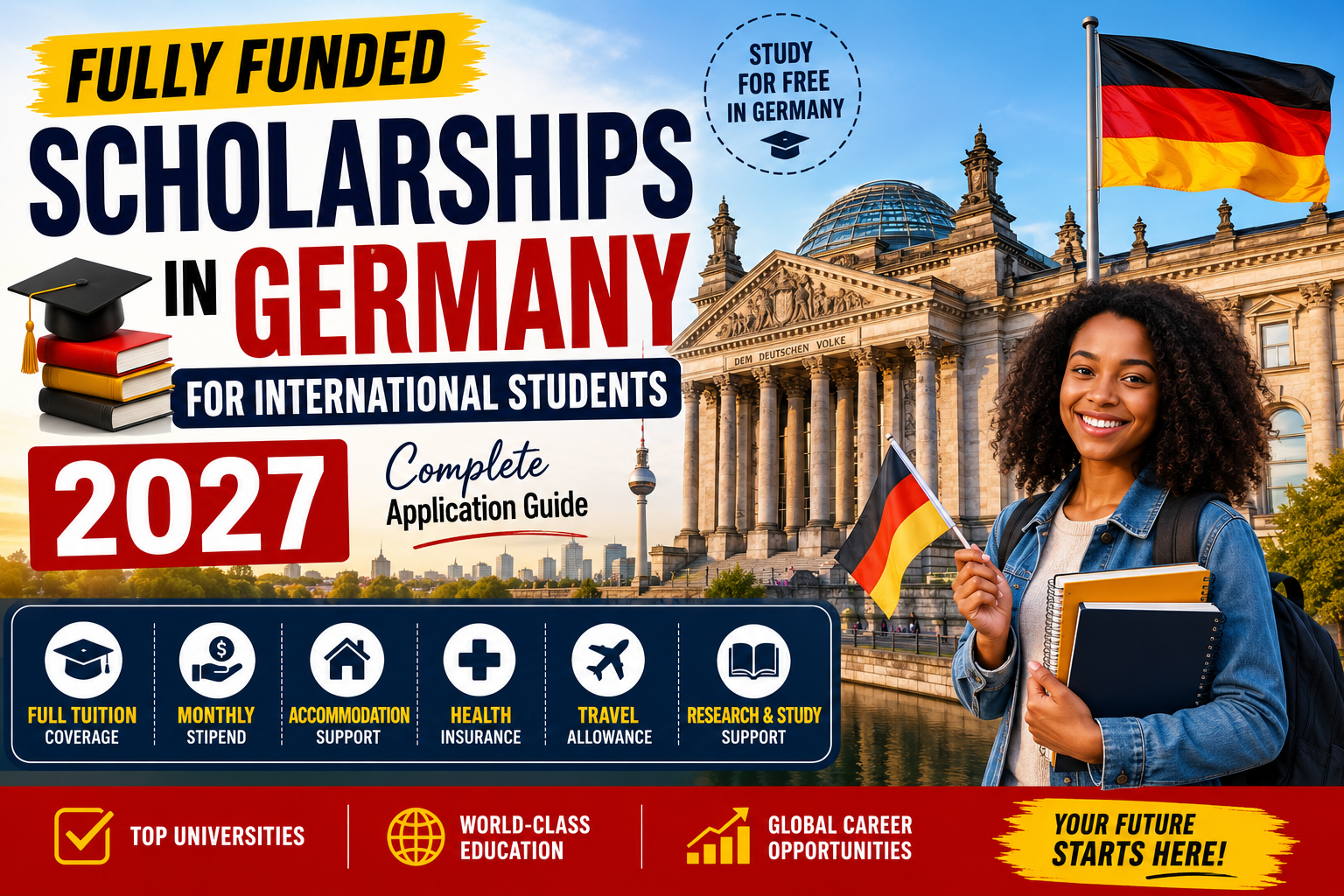
Germany has quietly become one of the most attractive study destinations in the world.
While countries such as Canada, the United Kingdom, and Australia often dominate conversations about studying abroad, thousands of international students are discovering that Germany offers something truly remarkable: world-class education at little to no tuition cost, combined with generous scholarship opportunities.
For many students, especially those from Africa, Asia, and developing countries, the dream of earning a degree abroad often seems financially impossible.
Tuition fees alone can exceed $20,000 to $50,000 per year in some destinations.
Add accommodation, transportation, health insurance, books, and daily expenses, and the total cost can become overwhelming.
Germany presents a different reality.
Not only are many public universities extremely affordable, but a wide range of fully funded scholarships can cover tuition, accommodation, living expenses, travel costs, and health insurance.
For ambitious students seeking quality education without crippling debt, Germany remains one of the smartest choices in 2027.
This guide explains everything you need to know about fully funded scholarships in Germany, including the best scholarship programs, eligibility requirements, application strategies, and practical tips to maximize your chances of success.
Why Study in Germany?
Before exploring scholarship opportunities, it is important to understand why Germany continues attracting hundreds of thousands of international students each year.
Globally Recognized Universities
Germany is home to some of the world’s most respected institutions.
Universities such as:
• Technical University of Munich
• Heidelberg University
• Ludwig Maximilian University of Munich
• RWTH Aachen University
• Humboldt University of Berlin
consistently rank among the world’s leading institutions.
Affordable Education
Unlike many countries where tuition fees can be extremely high, numerous German public universities charge little or no tuition.
Students often pay only administrative or semester fees.
Strong Economy
Germany is Europe’s largest economy and one of the strongest globally.
This creates excellent opportunities for internships, research, networking, and employment after graduation.
Research Excellence
Germany invests heavily in research and innovation.
Students gain access to advanced laboratories, industry partnerships, and internationally respected research programs.
Post-Study Opportunities
Graduates often have opportunities to remain in Germany and search for employment after completing their studies.
What Is a Fully Funded Scholarship?
A fully funded scholarship typically covers most or all educational expenses.
Benefits may include:
• Full tuition fees
• Monthly living allowance
• Accommodation support
• Health insurance
• Airfare
• Research grants
• Study materials
• Conference funding
Depending on the scholarship program, students may receive enough support to focus entirely on their studies.
Top Fully Funded Scholarships in Germany for 2027
- DAAD Scholarships
The German Academic Exchange Service (DAAD) remains Germany’s most prestigious scholarship provider.
Every year, DAAD supports thousands of international students.
Benefits Include:
• Monthly stipend
• Travel allowance
• Health insurance
• Research support
• Tuition assistance where applicable
Popular Fields:
• Engineering
• Public Policy
• Agriculture
• Economics
• Development Studies
• Environmental Science
DAAD scholarships are highly competitive but among the most generous funding opportunities available.
Official Application Portal:
Click Here
- Heinrich Böll Foundation Scholarships
The Heinrich Böll Foundation provides funding to outstanding international students pursuing undergraduate, master’s, and doctoral studies.
Selection Criteria:
• Academic excellence
• Leadership qualities
• Social engagement
• Commitment to sustainability
Benefits:
• Monthly stipend
• Additional allowances
• Networking opportunities
- Konrad-Adenauer-Stiftung Scholarships
This scholarship supports talented international students demonstrating strong academic performance and leadership potential.
Benefits:
• Monthly financial support
• Mentorship opportunities
• Leadership development
Popular Among:
• Social science students
• Political science students
• Public policy candidates
- Friedrich Ebert Foundation Scholarship
Students committed to social responsibility and leadership often find this scholarship attractive.
Coverage Includes:
• Monthly stipend
• Health insurance support
• Family allowances where applicable
- Deutschlandstipendium
This national scholarship program supports talented students across Germany.
Benefits:
• Monthly financial assistance
• Recognition for academic achievement
Many universities participate in the program.
Who Can Apply?
Germany welcomes applications from students across the world.
Typical eligibility requirements include:
Academic Excellence
Strong academic performance remains one of the most important factors.
Degree Requirements
Applicants must possess qualifications appropriate for their intended level of study.
Language Proficiency
Depending on the program:
• IELTS
• TOEFL
• Duolingo
• German language certificates
may be accepted.
Leadership Experience
Many scholarships value leadership, volunteerism, and community impact.
Motivation and Career Vision
Selection committees often prioritize candidates with clear educational and professional goals.
Best Fields of Study with Scholarship Opportunities
Some disciplines attract more scholarship funding than others.
Popular areas include:
Engineering
Germany’s engineering reputation remains unmatched.
Computer Science
Technology and digital innovation continue receiving substantial investment.
Artificial Intelligence
AI-related programs are growing rapidly.
Renewable Energy
Germany remains a global leader in sustainability and green technology.
Public Health
Healthcare and public health programs continue attracting scholarship support.
Agriculture
Food security and sustainable agriculture remain priority areas.
Business and Economics
Future business leaders frequently receive scholarship opportunities.
How to Find More Fully Funded Scholarships in Germany
One of the biggest mistakes international students make is limiting themselves to only one scholarship application.
Successful applicants often apply for multiple funding opportunities simultaneously.
Germany has hundreds of scholarships offered by:
• Universities
• Government agencies
• Foundations
• Religious organizations
• Research institutes
• International development agencies
The best places to search include:
University Scholarship Portals
Most German universities maintain dedicated scholarship pages for international students.
Always visit the official scholarship section of your target university.
DAAD Scholarship Database
The DAAD scholarship database remains one of the largest funding resources available to international students.
It allows applicants to search opportunities by:
• Country
• Subject area
• Degree level
• Scholarship type
Foundation Scholarships
Many students focus exclusively on DAAD and overlook valuable foundation funding.
Examples include:
• Heinrich Böll Foundation
• Friedrich Ebert Foundation
• Konrad-Adenauer-Stiftung
• Rosa Luxemburg Foundation
These programs often provide generous support packages.
Step-by-Step Application Process
Winning a scholarship rarely happens by accident.
Most successful recipients begin preparing months before application deadlines.
Step 1: Choose Your Program
Start by identifying a master’s or doctoral program aligned with your academic and career goals.
Questions to ask:
• Does the program match my interests?
• Is the university recognized internationally?
• Are scholarships available?
• Does the curriculum support my career plans?
Step 2: Check Eligibility Requirements
Every scholarship has specific requirements.
Review:
• Academic qualifications
• Nationality requirements
• Work experience requirements
• Language requirements
• Age limits (if applicable)
Never assume eligibility.
Always verify.
Step 3: Gather Required Documents
Preparing documents early reduces stress and improves application quality.
Common requirements include:
Academic Documents
• Degree certificates
• Academic transcripts
• Graduation records
Personal Documents
• International passport
• Passport photographs
Supporting Documents
• Curriculum Vitae (CV)
• Motivation letter
• Personal statement
• Research proposal (for research programs)
Recommendation Letters
Strong recommendation letters can significantly improve your competitiveness.
Step 4: Write a Strong Motivation Letter
This document is often the deciding factor between successful and unsuccessful applicants.
Your motivation letter should explain:
• Why you chose Germany
• Why you selected the program
• Your academic interests
• Career objectives
• Future impact plans
Avoid generic statements.
Specificity creates credibility.
How to Write a Winning Scholarship Essay
Many applicants struggle with scholarship essays because they focus too heavily on describing achievements.
Reviewers want more than a list of accomplishments.
They want a compelling story.
Tell Your Story
Discuss:
• Challenges you have overcome
• Experiences that shaped your goals
• Personal motivations
Show Impact
Explain how your education will benefit:
• Your community
• Your profession
• Your country
• Society
Demonstrate Leadership
Leadership does not always mean holding formal positions.
Examples include:
• Organizing community initiatives
• Mentoring students
• Leading volunteer projects
• Solving local problems
Be Authentic
Reviewers read thousands of applications.
Authentic essays stand out.
Copied or overly generic content rarely succeeds.
Scholarships in Germany Without IELTS
One of the most searched questions among international students is:
Can I study in Germany without IELTS?
The answer is often yes.
Many universities accept alternative evidence of English proficiency.
Examples include:
• Medium of Instruction Letter (MOI)
• Previous education completed in English
• TOEFL scores
• Duolingo English Test
• University-specific assessments
However, requirements vary by institution.
Always verify directly with the university.
Living Costs in Germany for International Students
Even when receiving scholarships, students should understand expected living expenses.
Average Monthly Costs
Accommodation: €300–€800
Food: €150–€350
Transportation: €30–€100
Health Insurance: €100–€150
Personal Expenses: €100–€300
Monthly living expenses generally range between:
€850–€1,400
Fully funded scholarships often provide sufficient stipends to cover most of these costs.
Can International Students Work While Studying?
Yes.
Germany permits international students to work under specific conditions.
Benefits include:
• Additional income
• Professional experience
• Networking opportunities
• Career development
Many students use part-time work to supplement scholarship funding and gain practical experience.
What Happens After Graduation?
One of Germany’s biggest advantages is its post-study opportunity framework.
After graduation, many students may remain in Germany to search for employment.
This creates pathways toward:
• Professional employment
• Long-term residency opportunities
• Career advancement
• International work experience
Germany’s strong economy continues creating demand for qualified graduates.
Common Reasons Scholarship Applications Are Rejected
Understanding these mistakes can dramatically improve your chances.
Incomplete Applications
Missing documents frequently lead to automatic rejection.
Weak Motivation Letters
Generic applications rarely succeed.
Poor Academic Performance
While not every scholarship requires perfect grades, strong academic records remain important.
Ignoring Instructions
Failure to follow application guidelines can be costly.
Weak Recommendation Letters
Generic references provide little value.
Late Applications
Many excellent candidates miss opportunities simply because they apply after deadlines.
Frequently Asked Questions
Are scholarships in Germany really fully funded?
Many scholarships cover tuition, living expenses, travel costs, and health insurance.
Can African students apply?
Absolutely.
Germany actively welcomes applications from African countries.
Is German language proficiency required?
Not always.
Many programs are taught entirely in English.
Can undergraduate students get scholarships?
Yes, although master’s and doctoral opportunities tend to be more numerous.
Is Germany cheaper than Canada or the UK?
In many cases, yes.
Germany’s affordable education system makes it one of the most cost-effective study destinations.
Can I stay in Germany after graduation?
Many graduates may qualify for post-study opportunities that allow them to seek employment.
Final Thoughts: Germany Could Be Your Gateway to a World-Class Education
Every year, thousands of talented students postpone their dreams because they assume studying abroad is financially out of reach.
Germany proves otherwise.
With affordable education, internationally respected universities, generous scholarship programs, and strong career opportunities, Germany has become one of the best destinations for ambitious international students.
Whether your goal is engineering, public health, computer science, renewable energy, business, or research, opportunities exist.
The scholarships highlighted in this guide have already helped countless students transform their futures.
Many started exactly where you are now—searching online for information and wondering whether studying abroad was truly possible.
The difference is that they applied.
Research your programs.
Prepare your documents.
Strengthen your essays.
Apply for multiple scholarships.
And give yourself the opportunity to compete.
Your future in Germany may begin with a single application.
The best time to start preparing for the 2027 scholarship cycle is today.