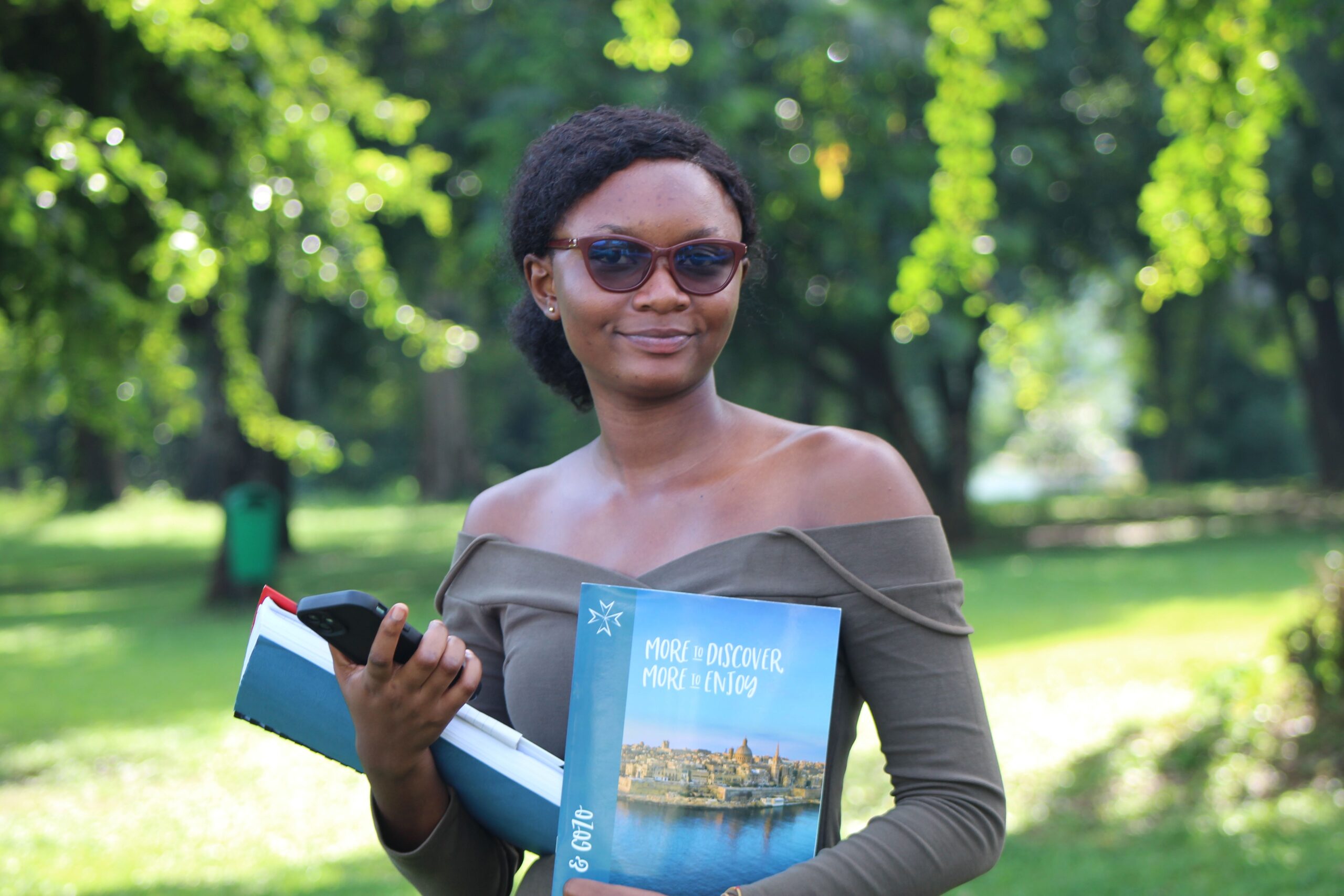
If you are considering a European study destination with an English-speaking academic environment, a compact geography, a Mediterranean lifestyle, and access to the European education system, Malta should be seriously considered for 2027.
Malta is a small EU member state located in the Mediterranean, and its higher education sector includes universities, colleges, and specialized institutions that offer programs in various fields such as business, computing, engineering, health sciences, tourism, law, arts, and vocational education.
For international students, the main attractions of Malta include the widespread use of English, its proximity to other European countries, and an increasing number of undergraduate and postgraduate programs.
The most prominent public university in Malta is the University of Malta (UM), while the Malta College of Arts, Science and Technology (MCAST) plays a crucial role in technical, vocational, and professionally-oriented education. MCAST offers programs across multiple qualification levels and industries.
However, studying in Malta is not necessarily inexpensive. International students need to budget for tuition, accommodation, food, transportation, insurance, visa-related expenses, and other living costs. Tuition fees can vary significantly depending on the institution, program, and nationality. The University of Malta provides course-specific tuition information rather than a single universal fee for all international students.
This guide explains how to study in Malta in 2027, covering the best universities and colleges, scholarships, admission requirements, tuition fees, the student visa process, residence requirements, accommodation options, the cost of living, and practical advice for applicants from Nigeria and other countries.
Why Study in Malta in 2027?
Malta has several characteristics that make it attractive to international students.
1. English Is Widely Used
One of Malta’s strongest advantages is its English-speaking environment.
English is an official language of Malta alongside Maltese. This can make the country particularly attractive to students from Nigeria, Ghana, Kenya, India, Pakistan and other countries where English is already widely used in education.
For students who want to study in Europe without having to learn an entirely new language before starting their degree, this can be a major advantage.
2. Malta Is an EU Country
Malta is a member of the European Union.
That gives international students studying there exposure to an EU academic and professional environment.
However, one important distinction must be understood:
A Maltese student residence permit does not automatically give a non-EU student the right to live or work permanently in another EU country.
If you later want to move to another European country for employment or further study, you will need to meet that country’s immigration rules.
3. A Compact Study Destination
Malta is geographically small.
This can make travelling between different parts of the country easier than in large countries such as Germany, Canada or Australia.
Many students can reach their campus, accommodation, shops and other services without the long intercity journeys common in larger countries.
4. Mediterranean Lifestyle
Students can enjoy:
- Beaches
- Historic towns
- Mediterranean weather
- Restaurants
- Cultural events
- Outdoor activities
- European travel opportunities
This combination can make Malta attractive to students who want a different lifestyle from the traditional northern European study experience.
5. Strong Tourism and Services Economy
Malta has a significant tourism, hospitality and services sector.
Students studying:
- Hospitality
- Tourism
- Business
- Management
- Marketing
- Events
- Culinary studies
may find the country’s economic environment particularly relevant to their studies.
Best Universities and Higher-Education Institutions in Malta
When people search for the “best universities in Malta,” it is important to distinguish between universities and other higher-education institutions.
For most international students, the first institutions worth researching include:
- University of Malta
- Malta College of Arts, Science and Technology (MCAST)
- Other MFHEA-licensed higher-education institutions
Your choice should depend on the level and type of programme you want to study.
1. University of Malta
The University of Malta is the country’s principal public university and is the first institution most international students should investigate.
It offers programmes across areas including:
- Arts
- Business
- Science
- Engineering
- Medicine
- Health sciences
- Information technology
- Law
- Education
- Social sciences
- Humanities
The university has campuses including Msida, Valletta, Gozo and Marsaxlokk.
Its international students’ portal provides information on:
- Admissions
- Tuition
- Visa and residence
- Accommodation
- International opportunities
- Student services.
Why choose the University of Malta?
It may be a strong option if you want:
- A traditional university degree
- Bachelor’s programmes
- Master’s programmes
- PhD study
- Research opportunities
- Professional programmes
- A broad choice of academic disciplines
2. Malta College of Arts, Science and Technology — MCAST
MCAST is particularly important for students interested in practical, technical and career-focused education.
The institution offers programmes across multiple levels, from vocational education through higher education and postgraduate study. Its catalogue allows prospective students to search courses by institute, qualification level, subject, skills and career pathway.
Areas can include:
- Engineering
- ICT
- Business
- Applied sciences
- Health and social care
- Creative arts
- Maritime studies
- Building and construction
- Community services
MCAST states that Maltese and EU candidates generally study its courses free of course fees, while international students from outside the EU are required to pay applicable fees. Fees are determined according to course level and duration.
Why choose MCAST?
It may be particularly suitable if you want:
- Technical training
- Practical skills
- Professional qualifications
- Engineering
- ICT
- Applied sciences
- Career-oriented programmes
Choosing Between University of Malta and MCAST
The choice is relatively straightforward if you first identify your career objective.
Choose the University of Malta if:
You want a traditional academic degree, research career or professional programme.
Consider MCAST if:
You prefer practical, technical or vocational education with a stronger emphasis on workplace skills.
Neither institution is automatically “better” for every student.
The right choice depends on your:
- Academic background
- Career goals
- Budget
- Desired qualification
- Programme
- Immigration situation
Study Programmes in Malta for International Students
Malta offers programmes in many fields.
Popular options include:
Business and Finance
- Accounting
- Banking
- Finance
- Business administration
- Economics
- Marketing
- Management
Information Technology
- Computer science
- Software development
- Cybersecurity
- Artificial intelligence
- Data science
- Information systems
Engineering
- Mechanical engineering
- Electrical engineering
- Electronics
- Construction
- Civil engineering
- Industrial technology
Health
- Nursing
- Pharmacy
- Biomedical sciences
- Public health
- Health sciences
Tourism and Hospitality
- Tourism management
- Hotel management
- Hospitality
- Culinary arts
- Events management
Social Sciences and Humanities
- Psychology
- Sociology
- Education
- International relations
- Communications
- History
Admission Requirements to Study in Malta
Admission requirements depend on:
- University
- Programme
- Qualification level
- Country of education
- Academic background
- English-language ability
You should therefore never assume that one set of requirements applies to every Maltese institution.
Undergraduate Admission
For a Bachelor’s programme, you will generally need an upper-secondary qualification equivalent to the required Maltese qualification.
The University of Malta evaluates international qualifications on a country-specific basis.
For example, UM has specific guidance for Nigerian qualifications. It states that applicants holding the West African Senior School Certificate Examination (WASSCE) may be offered pathway options through its International School for Foundation Studies for certain undergraduate routes.
This is important for Nigerian students.
Rather than assuming that WAEC or NECO automatically gives direct entry into every Bachelor’s programme, check the specific programme and country requirements.
Master’s Degree Admission
For postgraduate study, you will normally need:
- Recognised Bachelor’s degree
- Academic transcripts
- Proof of English proficiency where required
- Passport
- CV
- Personal statement or motivation letter
- References where required
Some programmes may require relevant professional experience.
Competitive programmes can also have higher academic requirements.
PhD Admission
Doctoral programmes are usually research-intensive.
You may need:
- Master’s degree
- Research proposal
- Academic transcripts
- Academic references
- CV
- Evidence of research experience
- Potential supervisor
- Proof of English proficiency
The exact requirements depend on the research area and institution.
English Language Requirements
International students may need to demonstrate English proficiency.
Possible accepted qualifications can include:
- IELTS
- TOEFL
- Cambridge English
- Other recognised qualifications
However, exemptions can exist depending on your previous education.
Never take an agent’s statement that “IELTS is not required” as universal.
Check the specific programme.
The University of Malta’s admissions resources include information on English-language requirements and comparing overseas qualifications.
Tuition Fees in Malta for International Students
One of the most important parts of planning to study in Malta is understanding tuition.
There is no single tuition fee for all international students.
The University of Malta states that applicable tuition and enrolment fees are available through its course-search system, with the specific amount and payment deadline indicated in the acceptance documentation where applicable.
This means you should always check the exact programme rather than relying on a generic “Malta tuition fee” figure.
University of Malta Tuition Fees
Fees vary by:
- Course
- Level
- Duration
- EU/non-EU status
- Programme structure
For example, UM’s published postgraduate information shows that annual fees for certain doctoral programmes are €11,000 for full-time non-EU/EEA students, compared with €600 for full-time EU/EEA students.
That example demonstrates why international students must check programme-specific fees.
A student applying for a Master’s programme should therefore:
- Find the exact programme.
- Open the programme’s fees information.
- Check the non-EU/EEA rate.
- Check whether there is an annual enrolment fee.
- Check whether laboratory or bench fees apply.
- Confirm the payment schedule.
MCAST Tuition Fees
MCAST also does not have one universal fee for every international student.
The institution states that international candidates from outside the EU pay fees for their respective courses and that fees depend on the qualification level and course duration.
MCAST publishes fee information for non-EU candidates and provides payment information and funding resources.
Before applying, calculate:
Tuition + accommodation + living expenses + visa/residence costs + insurance + travel.
Scholarships to Study in Malta in 2027
Scholarships can significantly reduce the financial burden of studying abroad.
However, prospective students should understand that Malta does not have one universal scholarship that automatically fully funds every international student.
Scholarship availability varies by:
- Nationality
- Academic level
- Programme
- Institution
- Research area
- Year
- Funding organisation
University of Malta Scholarships
The University of Malta maintains a dedicated scholarships page listing current opportunities. These have included scholarships for specific nationalities and postgraduate opportunities.
Examples of scholarships currently listed by UM include opportunities involving:
- Tunisian nationals
- Palestinian nationals
- Islands and Small States Institute scholarships
This demonstrates an important point:
Scholarship eligibility can be highly targeted.
A scholarship may be fully funded but restricted to applicants from a specific country or region.
Therefore, international students should never assume that a scholarship advertised on a university website is open to all nationalities.
Islands & Small States Institute Scholarships
The University of Malta’s Islands and Small States Institute has offered Master’s-level scholarships.
For the 2026–27 academic year, the university announced three scholarships covering University of Malta tuition fees and a €1,000 research grant for eligible recipients.
These awards are not equivalent to a universal full-cost scholarship covering every living expense.
But they demonstrate the type of targeted funding international students should look for.
Scholarships for Specific Nationalities
The University of Malta has also published scholarship schemes that can cover tuition and provide living support for particular groups.
For example, its scholarship information for Tunisian nationals describes:
- University tuition payment
- €1,300 monthly subsistence allowance
- Visa expenses capped at €350
- Return travel support subject to a stated cap.
A separate scholarship for Palestinian nationals has also included tuition, €1,300 monthly subsistence support and capped visa/travel expenses.
These are excellent examples of why scholarship research should be based on your nationality and programme, not simply the phrase “fully funded Malta scholarship.”
How to Find Malta Scholarships for 2027
Start with:
University websites
Check the scholarship pages of:
- University of Malta
- MCAST
- Other licensed institutions
Government organisations
Check:
- Malta government education agencies
- Scholarship announcements
- Bilateral education programmes
International organisations
Research:
- Erasmus+
- International foundations
- Development organisations
- Research grants
- Institution-specific funding
Erasmus+ and Malta
Because Malta is an EU member state, Erasmus+ can be relevant to eligible students and exchange participants.
Funding depends on the specific programme and mobility arrangement.
Do not assume Erasmus+ automatically pays your entire degree tuition and living expenses.
Some Erasmus opportunities are for:
- Exchange students
- Mobility
- Traineeships
- Academic staff
- Specific funded projects
Always check the specific funding conditions.
How to Apply for a Scholarship
A typical process looks like this:
Step 1: Find an eligible scholarship
Check:
- Nationality
- Degree level
- Programme
- Academic requirements
- Deadline
Step 2: Prepare documents
You may need:
- Academic transcripts
- Certificates
- CV
- Passport
- Motivation letter
- References
- Research proposal
Step 3: Apply
Follow the institution’s application instructions exactly.
Step 4: Attend an interview if required
Some competitive awards may interview shortlisted candidates.
Step 5: Wait for the award decision
Do not make irreversible travel or financial commitments until your funding and admission position are confirmed.
Malta Student Visa Requirements for 2027
If you are a non-EU student who requires a visa to enter Malta for studies, immigration planning is essential.
Malta’s Identità distinguishes between short-stay Schengen visas and National Visas for longer stays. The National Visa is the long-stay/D visa category and can cover stays exceeding 90 days, subject to the applicable rules.
For students, Identità provides specific information through its Central Visa Unit.
The student visa page distinguishes between:
- Courses not exceeding 90 days
- Courses exceeding 90 days
- Extensions of stay.
Who Needs a Malta Student Visa?
Your nationality matters.
EU/EEA nationals generally have different entry and residence arrangements from third-country nationals.
If you are from Nigeria, Ghana, India, Pakistan or another non-EU country, you should assume that immigration requirements will apply and check Identità’s current rules before travelling.
Identità states that third-country nationals who need a visa to travel to the Schengen Area must possess an education-purpose visa for relevant study situations.
Documents for a Malta Student National Visa
Identità’s published student National Visa checklist includes documents such as:
- Completed visa application form
- Valid passport
- Admission/enrolment documentation
- Supporting financial documentation
- Accommodation documentation
- Travel/medical insurance documentation
- Other required supporting documents
The official checklist specifies, among other things, that the passport must have 10 months’ validity.
Because visa documentation can change, applicants should download the current checklist immediately before applying.
Proof of Financial Means
A student visa applicant generally needs to demonstrate that they can support themselves during their stay.
This is an area where you should be especially careful.
Do not manufacture bank statements or use fake financial documents.
Immigration authorities can verify documentation.
Your financial plan should realistically account for:
- Tuition
- Accommodation
- Food
- Transportation
- Insurance
- Personal expenses
- Emergency funds
- Travel
Accommodation Requirements
Before travelling to Malta, arrange suitable accommodation.
Possible options include:
- University accommodation
- Private student residences
- Shared apartments
- Homestays
- Private rental rooms
For students trying to control costs, shared accommodation can be significantly more affordable than renting an entire apartment alone.
Cost of Living in Malta for International Students
Your cost of living depends heavily on where you live and your lifestyle.
Major expenses include:
Accommodation
Usually the largest expense.
Food
You can reduce costs by:
- Cooking
- Buying supermarket products
- Avoiding daily restaurant meals
Transportation
Budget for:
- Bus
- Occasional taxi
- Other travel
Phone and Internet
Include monthly communication costs.
Study Materials
Some programmes require:
- Books
- Software
- Equipment
- Laboratory materials
Personal Expenses
Allow for:
- Clothing
- Entertainment
- Gym
- Travel
- Healthcare
- Emergencies
How Much Money Should You Budget?
Rather than giving students one misleading fixed figure, build your own monthly budget.
For example:
| Expense | Monthly Budget |
|---|---|
| Accommodation | €400–€800+ |
| Food | €200–€350 |
| Transport | €30–€70 |
| Mobile/Internet | €20–€50 |
| Personal expenses | €100–€200 |
| Study/miscellaneous | €50–€150 |
| Estimated total | €800–€1,620+ |
These are planning estimates, not official government minimums, and actual costs can be higher or lower depending on accommodation, location and lifestyle.
A student living alone in a private apartment could spend considerably more.
Shared accommodation and careful budgeting can reduce expenses.
Is Malta Cheap for International Students?
Malta can be more affordable than some major Western European destinations in certain circumstances, but it should not be described as universally cheap.
Accommodation can be expensive relative to the country’s small size.
Students should therefore avoid choosing Malta solely because they have seen online claims that “living costs are very low.”
The better question is:
“Can I afford Malta based on my actual university and accommodation?”
Can International Students Work While Studying in Malta?
Yes, subject to immigration and employment rules.
Malta’s Identità states that qualifying international students following courses exceeding 90 days may be permitted to work subject to applicable conditions.
Students are allowed to work a maximum of 20 hours per week after their first three months of study under the stated rules.
This is useful, but students should not build their entire financial plan around part-time employment.
A job may:
- Take time to find
- Pay less than expected
- Have limited hours
- Conflict with classes
- Depend on labour-market conditions
Your primary financial plan should therefore cover your essential expenses independently.
Malta Student Residence Permit
For longer studies, visa entry is only part of the immigration process.
Depending on your circumstances, you may need to obtain a residence permit after arriving in Malta.
Identità’s study guidance explains that certain third-country nationals pursuing eligible courses must follow the appropriate study residence process. Courses at MQF Level 5 or higher offered by licensed institutions can qualify under the relevant study framework.
This is another reason to verify that your chosen institution and programme are properly licensed and recognised.
Choose a Licensed Institution
Before paying tuition, verify your institution.
Malta’s higher-education system is regulated by the Malta Further and Higher Education Authority (MFHEA).
Students should confirm:
- Institution licence
- Programme recognition
- Qualification level
- Accreditation
- MQRIC recognition where relevant
Do not choose a school simply because an agent promises an easy visa.
Your academic institution matters to your immigration status and future career.
Study in Malta from Nigeria
For Nigerian students, the process should begin several months before the intended intake.
Step 1: Select your programme
Choose your course based on:
- Academic qualifications
- Career goal
- Budget
- Programme duration
Step 2: Check Nigerian qualification requirements
The University of Malta has country-specific guidance for Nigeria and explains pathways for applicants with WASSCE qualifications in applicable cases.
Step 3: Apply to the university
Submit:
- Certificates
- Transcripts
- Passport
- English evidence
- Other required documents
Step 4: Receive admission
Wait for your official offer.
Step 5: Pay required deposit/fees
Follow the acceptance letter’s instructions.
Step 6: Arrange accommodation
Do this before your visa appointment whenever possible.
Step 7: Apply for the appropriate visa
Use the latest Identità checklist.
Step 8: Travel after approval
Do not make major non-refundable commitments before your immigration position is secure.
Malta Study Visa Application Timeline for 2027
A sensible planning timeline is:
12–18 months before arrival
Research programmes and institutions.
9–12 months before
Prepare academic documents and English-language requirements.
6–9 months before
Submit university applications.
4–6 months before
Secure admission and funding.
3–5 months before
Arrange accommodation and visa documentation.
1–3 months before
Complete visa and travel preparations.
Deadlines vary.
For reference, the University of Malta’s October 2026 admissions schedule had an earlier deadline for non-EU applicants requiring visas than its general late application deadline.
That is a good example of why international students should not wait until the final application deadline.
How to Write a Strong Malta University Application
Your application should answer three questions.
Why this course?
Explain your academic and career goals.
Why Malta?
Focus on:
- Programme quality
- English-language education
- Relevant industry
- Academic environment
Why this university?
Mention specific:
- Modules
- Facilities
- Research areas
- Academic departments
- Career opportunities
Avoid writing:
“I want to study in Malta because Malta is beautiful.”
That is not a strong academic reason.
How to Avoid Malta Student Visa Problems
1. Use genuine documents
Never submit:
- Fake bank statements
- Fake certificates
- Fake employment letters
- Fake accommodation documents
2. Keep your story consistent
Your:
- Academic history
- Financial history
- Course choice
- Career plan
- Visa application
should make sense together.
3. Verify your admission letter
Apply directly to the institution or through an authorised representative.
4. Do not rely on social-media agents
Always cross-check information with official university and government sources.
Common Mistakes International Students Make
Mistake 1: Choosing a course only because it is “easy”
Choose a legitimate programme aligned with your background and career.
Mistake 2: Ignoring tuition
Calculate the entire programme cost.
Mistake 3: Underestimating accommodation
Housing can become one of your largest expenses.
Mistake 4: Assuming scholarships are automatic
Most scholarships are competitive and have separate eligibility criteria.
Mistake 5: Applying too late
Visa applicants often have earlier deadlines.
Mistake 6: Assuming part-time work will fund everything
Do not depend on a job you have not yet secured.
Mistake 7: Trusting guaranteed-visa promises
No legitimate consultant should guarantee immigration approval.
Frequently Asked Questions
Is Malta a good country to study in 2027?
Malta can be a good option for international students who value English-language education, EU location, compact geography and programmes in areas such as business, ICT, engineering, health and tourism.
Is education free in Malta for international students?
Not generally. MCAST states that international candidates from outside the EU pay applicable course fees, while the University of Malta publishes programme-specific fees.
How much does it cost to study in Malta?
It depends on your institution and programme. Tuition must be checked against the specific course, while living expenses depend heavily on accommodation and lifestyle.
Can Nigerians study in Malta?
Yes. Nigerian applicants can apply to eligible Maltese institutions. The University of Malta provides country-specific guidance for Nigerian qualifications.
Do I need IELTS to study in Malta?
It depends on the institution and programme. Some students may qualify for an exemption based on their previous education.
Can I work while studying in Malta?
Eligible international students can work subject to applicable conditions. Identità states that qualifying students can work up to 20 hours per week after their first three months of study.
What is the best university in Malta?
The University of Malta is the country’s main public university and a leading option for traditional undergraduate, postgraduate and doctoral study. MCAST is another major option, particularly for practical and technical education.
Does Malta offer fully funded scholarships?
Some targeted scholarship schemes can cover tuition and provide subsistence support, but availability depends on nationality, programme and academic year. UM’s scholarship listings provide examples of targeted awards.
How long does a Malta student visa last?
Malta uses a National Visa/D visa system for long stays, with the exact validity depending on the circumstances. Identità states that National Visas cover stays exceeding 90 days and up to 365 days under the applicable rules.
Can I stay in Malta after graduation?
Possibilities depend on the immigration route available at the time, your employment situation, qualification and applicable Maltese immigration rules. Do not assume that graduation automatically gives permanent residence.
Final Thoughts
Studying in Malta in 2027 could be a viable option for international students seeking an English-speaking European environment. However, success largely depends on selecting the right institution, program, and financial plan.
The University of Malta is a great starting point for those pursuing a traditional university education, while the Malta College of Arts, Science and Technology (MCAST) is particularly appealing for practical and technical programs. Both institutions offer resources for international students, including information on admissions and tuition fees.
Scholarships are available, but it’s important for students to know that many are targeted by nationality, program, or academic level, meaning they may not be open to all international applicants. The University of Malta’s current scholarship listings provide a clear example of this.
For non-EU applicants, preparing for immigration is crucial. You may need a National Student Visa for long courses and will have to arrange appropriate residence. Identità provides official guidelines on student visa requirements, distinguishing between short courses and those exceeding 90 days.
If you are applying from Nigeria, it’s advisable to start the process early. Check your qualifications against the university’s specific requirements for your country, prepare your financial documents, secure legitimate accommodation, verify your chosen program and institution, and rely only on official immigration guidance.
Most importantly, do not choose Malta solely because an agent promises an easy European visa. Ensure that your choice is based on the suitability of the university, program, costs, and potential career pathways.
With careful planning, authentic documentation, and an early application, Malta can be a rewarding European study destination to consider for the 2027 academic year.