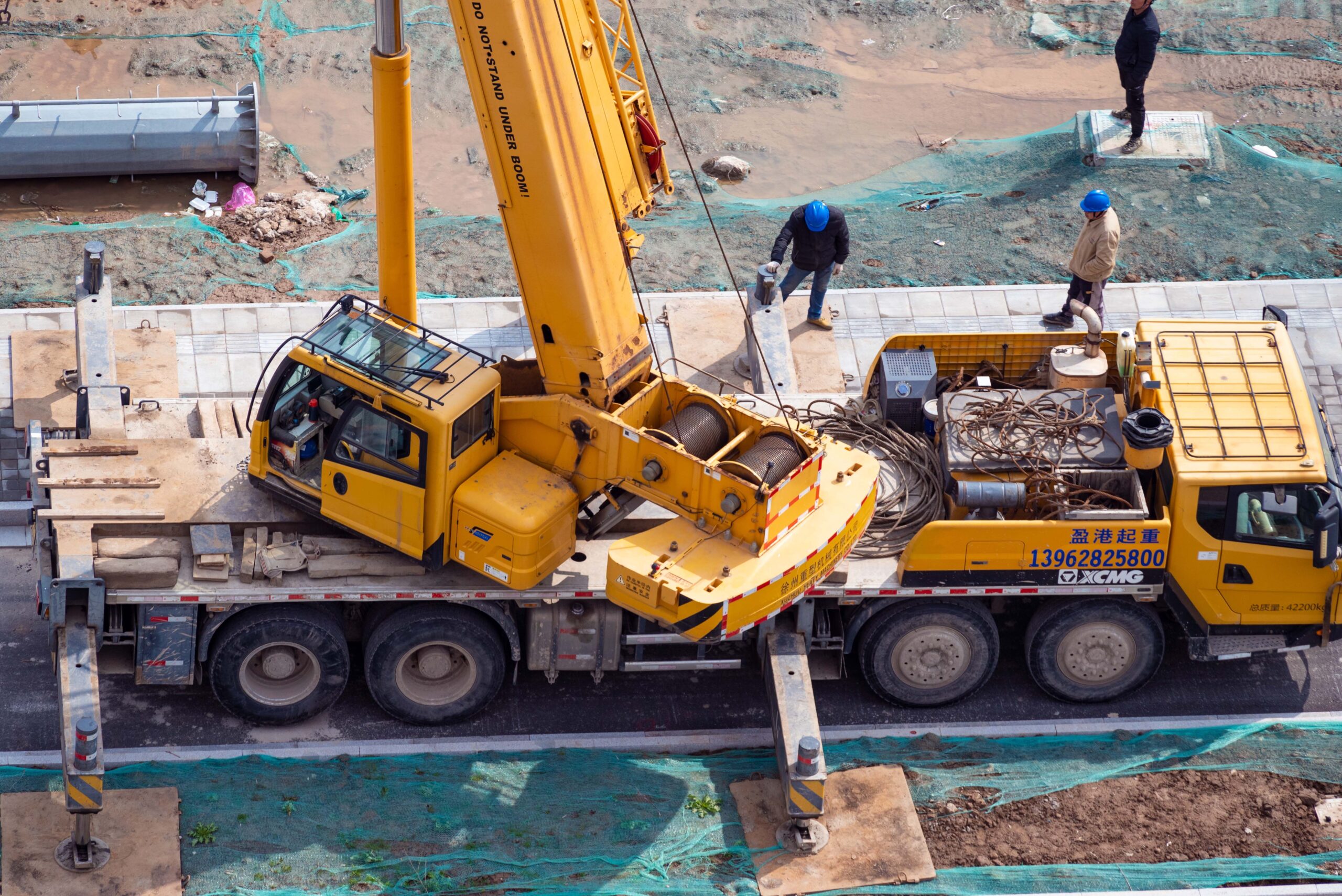
If you have experience operating cranes on construction sites, in ports, at industrial facilities or in mining operations, Australia may be worth considering for your next career move. The country’s construction, infrastructure, resources and logistics industries use heavy lifting equipment to move materials, install structures and support large-scale projects.
For overseas applicants, however, finding a job is only part of the process. You also need to understand which employers can sponsor foreign workers, what Australian crane licences are required, how much operators can earn and whether your existing qualifications will be recognised.
The good news is that experienced crane operators can investigate opportunities with construction contractors, heavy-lifting companies, mining service providers, industrial businesses and port operators. Some employers recruit internationally when they need specialised skills that are difficult to find locally.
But there is an important distinction: a crane operator vacancy is not automatically a visa-sponsored job. Australian licensing requirements, employer sponsorship rules and eligible occupations all affect whether an overseas applicant can legally take up a particular position.
This guide explains crane operator jobs in Australia in 2026, including salary expectations, licence categories, visa pathways, qualifications, application steps and practical ways to find genuine employers.
Whether you are applying from Nigeria, another African country or elsewhere overseas, the aim is to help you understand the process before investing money in an application or relocation.
What Are Crane Operator Jobs in Australia?
Crane operators use lifting machinery to move heavy materials, equipment and structural components safely. Depending on their specialisation, they may work on building projects, roads, bridges, industrial facilities, mining sites, ports or major infrastructure developments.
The job requires more than controlling a machine. Operators must understand lifting limits, follow site safety procedures, communicate with ground crews and ensure loads are moved without putting people or property at risk.
Australian employers may recruit operators for several types of cranes and lifting equipment.
1. Mobile Crane Operator Jobs
Mobile crane operators work with cranes mounted on wheeled or tracked vehicles. Their work can involve lifting construction materials, machinery, steel components and other heavy loads.
Typical responsibilities include:
-
Inspecting the crane before operation.
-
Checking load weights and lifting limits.
-
Positioning the crane safely.
-
Following lift plans and site instructions.
-
Coordinating with doggers, riggers and site supervisors.
-
Reporting faults and maintaining equipment records.
Employers may seek operators with experience in particular mobile crane configurations and lifting capacities.
2. Tower Crane Operator Jobs
They are commonly used on large construction projects, especially high-rise buildings and developments where materials must be lifted to significant heights.
Tower crane operators may be responsible for lifting steel, concrete components, formwork and other construction materials.
Employers often look for relevant high-risk work licensing, practical experience, an understanding of lifting procedures and the ability to work closely with construction teams.
3. Overhead Crane Operator Jobs
Overhead cranes are used in factories, workshops, warehouses, steel plants and other industrial environments.
Operators move heavy products or equipment along fixed lifting systems, often within manufacturing or production facilities.
These positions may require familiarity with industrial safety procedures, load handling, equipment inspection and communication with other workers.
4. Crawler Crane Operator Jobs
Crawler cranes operate on tracked undercarriages and are used for demanding lifting work on infrastructure, industrial and construction projects.
Because some assignments involve heavy loads, complex site conditions and specialised equipment, employers may prefer experienced operators with a strong record of safe operation.
5. Franna and Pick-and-Carry Crane Operator Jobs
Franna cranes are a recognised type of pick-and-carry crane used in construction, industrial maintenance and equipment relocation.
Employers may seek operators who understand the equipment’s operating limitations, safe load handling and site-specific procedures.
Experience with a particular machine can strengthen your application, but you should still confirm which Australian licence class and site requirements apply to the exact equipment.
Crane Operator Salary in Australia 2026
Salary is one of the biggest considerations for overseas workers comparing job opportunities. Crane operators in Australia can earn competitive wages, particularly when they have specialised experience, the right licences and the ability to work on demanding projects.
However, there is no single salary for every crane operator. Earnings depend on the type of crane, location, industry, experience, roster and whether the position includes overtime, allowances or remote-site work.
Current advertised salary data from SEEK in October 2026 show the following industry averages for crane operator positions.
| Industry | Average advertised annual salary |
|---|---|
| Mining, Resources and Energy | AUD $101,358 |
| Trades and Services | AUD $88,746 |
| Construction | AUD $86,446 |
| Manufacturing, Transport and Logistics | AUD $66,802 |
Source: SEEK salary insights, October 2026. These are advertised salary averages by industry, not guaranteed starting salaries or visa-sponsored offers. Some figures may include superannuation or other benefits.
How much can crane operators earn per year?
For planning purposes, the figures above suggest that many advertised positions fall within a broad range of approximately AUD $65,000 to $105,000 per year, depending on the industry.
More experienced operators working in mining, heavy lifting, shutdown projects or specialised crane operations may find opportunities advertised at higher rates. For example, SEEK’s regional salary insights list some Western Australian locations with averages above AUD $150,000. Such figures may reflect a limited number of advertisements, particular rosters or specialised roles, so they should not be treated as typical earnings for every worker.
Before accepting a job offer, establish whether the quoted salary is:
-
A base salary before tax.
-
An hourly rate multiplied by guaranteed working hours.
-
An annual package that includes superannuation.
-
A salary that depends on overtime or additional shifts.
-
A casual rate that includes loading but provides less predictable hours.
-
A remuneration package with accommodation, meals or travel allowances.
These details can make a substantial difference to your actual take-home income.
What about hourly wages?
Some crane operators are paid hourly rather than through an annual salary. Hourly rates vary by location, experience, crane class and employment arrangement.
When comparing hourly offers, ask how overtime, weekend shifts, public holidays, travel time and site allowances are calculated. A higher hourly rate does not necessarily mean a higher annual income if the position offers fewer guaranteed hours.
Do mining and FIFO crane operator jobs pay more?
Some mining and remote-project positions offer higher compensation because of specialised equipment, demanding rosters, location and the nature of the work.
FIFO means fly-in, fly-out. Employees travel to a remote worksite for a rostered period and then return home for their break.
Before accepting a FIFO position, check:
-
The length of the roster and the number of rest days.
-
Whether flights are paid for by the employer.
-
Whether accommodation and meals are provided.
-
Whether the advertised salary includes allowances.
-
Whether overtime is guaranteed or dependent on operational needs.
-
Whether the employer can sponsor your visa for the actual role.
A high advertised salary should always be evaluated alongside the working conditions and sponsorship arrangements.
Crane Operator Licence Requirements in Australia 2026
Licensing is one of the most important parts of working as a crane operator in Australia. A worker may have years of experience overseas and still need to demonstrate that they meet Australian licensing requirements before operating particular equipment.
Under Australia’s high-risk work licensing framework, certain crane operations require the appropriate high-risk work (HRW) licence. The precise requirement depends on the equipment, its classification and the applicable state or territory rules.
Common Australian crane licence classes
Australian crane licence categories include several classes designed for different types and capacities of cranes.
| Licence class | General equipment category |
|---|---|
| C2 | Slewing mobile crane, up to 20 tonnes |
| C6 | Slewing mobile crane, up to 60 tonnes |
| C1 | Slewing mobile crane, up to 100 tonnes |
| C0 | Slewing mobile crane, over 100 tonnes |
| CN | Non-slewing mobile crane |
| CT | Tower crane |
| CV | Vehicle-loading crane |
| CO | Derrick crane |
These descriptions are a general guide to familiar licence categories. Crane licensing rules have been subject to review and amendments, so applicants must verify the exact current class definitions and requirements with the regulator in the state or territory where they intend to work. Not every class is suitable for every crane or lifting operation.
Can you use an overseas crane licence in Australia?
Do not assume that an overseas crane operator certificate automatically authorises you to operate a crane in Australia.
Your previous training and experience can help demonstrate competence to an employer, but the applicable Australian licensing requirements still need to be met. Depending on your circumstances, you may need to complete recognised training, assessment or additional licensing steps.
Before paying for a course, ask the relevant state or territory regulator how your overseas qualifications will be assessed.
How to obtain an Australian high-risk work licence
The general process involves:
-
Identifying the correct licence class for the crane you intend to operate.
-
Finding an appropriately registered training organisation authorised to deliver the relevant course.
-
Completing the required training and practical assessment.
-
Obtaining the required statement of attainment or equivalent documentation.
-
Applying to the relevant state or territory work health and safety regulator within the prescribed period.
Safe Work Australia’s guidance states that a high-risk work licence is generally valid for five years, with renewal requirements applying. The regulator in your jurisdiction provides the actual licensing service.
Do you need a dogging or rigging qualification?
Some crane-related jobs require additional qualifications in dogging or rigging, depending on the work being performed and the current licensing rules.
Dogging involves selecting and inspecting lifting gear and directing crane operators when loads cannot be seen clearly or safely controlled by the operator alone. Rigging involves setting up and securing equipment for lifting operations.
These are distinct activities from simply operating a crane. An employer may require one or both qualifications for a combined crane operator and dogman position.
If you already hold these qualifications overseas, confirm whether they are recognised for the intended work in Australia.
Visa Sponsorship for Crane Operator Jobs in Australia
For international applicants, finding an employer willing to hire you is only one part of the process. You must also qualify for an Australian work visa that permits the proposed employment.
The Australian Government’s Skills in Demand visa, subclass 482, allows approved employers to sponsor eligible skilled workers for nominated positions. The visa has different streams, each with its own conditions.
However, you should not assume that crane operator jobs automatically qualify for the standard employer-sponsored visa pathway. The occupation must satisfy the requirements of the specific visa stream, and the employer must be able to nominate the position under the applicable rules.
1. Skills in Demand visa — subclass 482
The subclass 482 visa may be relevant where an employer has a genuine vacancy and can sponsor a worker in an eligible occupation.
For the Core Skills stream, applicants generally need to satisfy requirements relating to:
-
An eligible nominated occupation.
-
An approved sponsoring employer and valid nomination.
-
Relevant skills and work experience.
-
Applicable English-language requirements.
-
Salary requirements, including the relevant income threshold and annual market salary rate.
-
Any required registration or skills assessment.
The Department of Home Affairs states that the Core Skills stream requires at least one year of relevant work experience in the nominated occupation or a related field. Other requirements also apply.
A crane operator’s eligibility must be checked against the current occupation list and applicable legislative rules. If the occupation is not eligible for the intended stream, another lawful pathway may be necessary.
2. Employer Nomination Scheme — subclass 186
The subclass 186 visa is a permanent employer-sponsored pathway for eligible workers.
It may be an option for some occupations and applicants, but it is not a general-purpose visa available to every worker who receives a job offer. The nominated occupation, employer, work experience, licensing and applicable stream requirements must all be satisfied.
Some applicants may qualify through a transition pathway after holding an eligible sponsored visa, while others may need to meet the requirements of the Direct Entry stream.
3. Skilled Employer Sponsored Regional visa — subclass 494
The subclass 494 visa is designed for eligible employer-sponsored employment in designated regional areas of Australia.
It may be worth investigating when searching for jobs outside the major metropolitan centres, but the actual occupation must qualify and the employer must meet the relevant sponsorship and nomination conditions.
A job located in a regional area does not automatically qualify for regional sponsorship.
4. Labour agreement arrangements
Some employers may recruit overseas workers through a labour agreement with the Australian Government.
This is a specific arrangement, not a general exemption from immigration rules. The employer must have an applicable agreement, and the position and applicant must satisfy its terms.
For a crane operator, this route should only be considered when a genuine employer confirms that its agreement covers the proposed position and the relevant visa pathway.
The salary threshold is not the only requirement
For visa nominations lodged from July 1, 2026, to June 30, 2027, the Core Skills Income Threshold is AUD $79,423. The applicable market salary and other nomination requirements must also be satisfied.
This threshold does not mean that any crane operator earning above AUD $79,423 automatically qualifies for sponsorship. Occupation eligibility, employer approval and all other visa criteria still matter.
For this reason, verify the occupation code and sponsorship pathway before relying on a vacancy or paying for migration advice.
Where to Find Crane Operator Jobs in Australia with Visa Sponsorship
The best approach is to search for real vacancies and then establish whether the employer will consider overseas applicants.
Many employers recruit crane operators locally, and a job advertisement may not offer sponsorship. Focus on companies operating large lifting fleets, major construction projects, mining operations and industrial sites where your specific experience could be valuable.
1. Construction companies
Construction contractors employ crane operators for commercial buildings, residential developments, bridges, roads and infrastructure projects.
Search for positions such as:
-
Mobile Crane Operator.
-
Tower Crane Operator.
-
Crane Operator and Dogman.
-
Crane Operator and Rigger.
-
Heavy Lift Operator.
2. Mining and resources companies
Mining operations and their contractors may need crane operators to support maintenance, equipment installation and shutdown activities.
Relevant employers can include mining contractors, equipment maintenance companies and heavy-lifting service providers.
Experienced operators familiar with large cranes, remote sites and industrial safety procedures may be better positioned for specialised vacancies.
3. Crane hire and heavy-lifting companies
Crane hire businesses provide lifting equipment and operators to construction, industrial and infrastructure clients.
They are worth investigating because their operations may involve different crane types, project locations and lifting capacities.
Examples of companies to research include Mammoet, Freo Group and other established crane and heavy-lifting contractors. Their inclusion here does not mean they currently sponsor overseas applicants; confirm the terms of each vacancy directly.
4. Ports, logistics and industrial facilities
Ports, freight terminals and industrial facilities use lifting equipment to move cargo, machinery and heavy materials. Some positions may be advertised under related titles rather than simply “crane operator.”
Try searching for overhead crane operator, industrial crane operator, lifting equipment operator and port equipment operator roles.
How to Apply for Crane Operator Jobs in Australia from Overseas
A targeted application is usually more effective than sending the same CV to dozens of employers.
Step 1: Prepare an Australian-style CV
Your CV should make it easy for a recruiter to understand your experience and the equipment you can operate.
Include:
-
Your full name and contact details.
-
A short professional profile.
-
Years of crane operating experience.
-
Types and capacities of cranes operated.
-
Relevant licences and qualifications.
-
Major projects and industrial environments.
-
Safety training and incident-prevention experience.
-
Employment history and professional references.
If you have operated 50-tonne, 100-tonne or larger cranes, state your actual experience clearly and accurately. Do not claim experience with equipment you have not operated.
Step 2: Gather evidence of your experience
Prepare copies of relevant certificates, employment references, training records and overseas licences.
Where possible, request employer references that describe your duties, the equipment you operated and the length of your employment.
These records may help an Australian employer assess your experience and determine what additional training or licensing you need.
Step 3: Search using the right keywords
Use job boards and company recruitment pages to find suitable vacancies.
Useful search phrases include:
-
“Crane operator visa sponsorship Australia.”
-
“Mobile crane operator overseas applicants.”
-
“Crane operator employer sponsorship 482.”
-
“Mining crane operator jobs Western Australia.”
-
“Franna crane operator jobs Australia.”
-
“Heavy lift crane operator Australia.”
-
“Crane operator and rigger jobs Australia.”
Treat sponsorship phrases as search terms, not proof that a vacancy qualifies for a visa.
Step 4: Apply directly to the employer
Read the job advertisement carefully and tailor your CV to the requirements.
If sponsorship is not mentioned, you can politely ask the recruitment team whether they consider qualified overseas applicants and whether sponsorship is available for the specific role.
Be prepared to explain your experience, your current location, your qualifications and your ability to meet Australian licensing requirements.
Step 5: Verify the visa pathway
Before making relocation plans, establish whether the employer can sponsor your nominated occupation under a valid visa pathway.
Check the current eligible occupation list, salary requirements and any relevant skills assessment or licensing rules.
A recruitment agency’s statement that “visa sponsorship is available” should not replace confirmation of the actual visa and nomination requirements.
Step 6: Complete the required immigration process
If an employer agrees to sponsor you and the role is eligible, follow the applicable nomination and visa application procedures.
You may need to provide identity documents, employment evidence, qualifications, English-language evidence, health checks and police certificates, depending on the visa requirements.
Do not resign from your current employment or purchase non-refundable flights until your circumstances and visa conditions have been properly confirmed.
Common Mistakes to Avoid When Applying for Crane Operator Jobs in Australia
Overseas applicants can lose time and money by overlooking details that seem minor at first.
Avoid these mistakes:
-
Assuming every crane operator job offers sponsorship. Most vacancies do not automatically include visa support.
-
Ignoring licence requirements. Overseas experience does not automatically authorise you to operate every crane in Australia.
-
Using a generic CV. Employers need evidence of your experience with specific equipment and lifting operations.
-
Trusting guaranteed visa promises. No recruitment agent can guarantee that the Australian Government will grant a visa.
-
Paying for a job offer. Be wary of anyone demanding money in exchange for guaranteed employment or sponsorship.
-
Ignoring salary conditions. Confirm whether the advertised package includes superannuation, overtime, allowances and accommodation.
-
Applying without checking occupation eligibility. A salary above the immigration threshold is not enough if the occupation or position does not qualify.
A genuine opportunity should come with a clear job description, verifiable employer details and a transparent explanation of the recruitment and sponsorship process.
Frequently Asked Questions About Crane Operator Jobs in Australia with Visa Sponsorship 2026
Can foreigners get crane operator jobs in Australia with visa sponsorship?
Potentially, yes. However, sponsorship depends on the employer, the job, the worker’s qualifications and the applicable visa pathway. Crane operator vacancies do not automatically qualify for employer-sponsored migration.
How much does a crane operator earn in Australia in 2026?
SEEK’s October 2026 salary insights show average advertised annual salaries of approximately AUD $66,802 in manufacturing, transport and logistics, AUD $86,446 in construction, and AUD $101,358 in mining, resources and energy. Actual offers vary by experience, location and working arrangements.
Do I need an Australian crane licence?
For crane operations classified as high-risk work, the appropriate Australian high-risk work licence is generally required. Your exact licence class depends on the crane and the work you will perform.
Can I apply from Nigeria without an Australian crane licence?
You can investigate and apply for suitable vacancies from overseas, but an employer may require an Australian licence or proof that you can obtain the required authorisation. Confirm the licensing requirements before accepting a position.
Which Australian states should I consider?
Western Australia and Queensland are worth investigating because of their construction, mining and industrial activity. New South Wales and Victoria also have construction and infrastructure projects. Job availability and sponsorship eligibility vary, so compare actual vacancies rather than choosing a state based on salary estimates alone.
Does the Skills in Demand visa subclass 482 cover all crane operators?
No. The proposed occupation and position must meet the requirements of the relevant visa stream. Verify the current occupation list and nomination rules before assuming a crane operator position is eligible.
Can a crane operator get permanent residency in Australia?
Some employer-sponsored pathways may lead to permanent residence for eligible applicants. However, eligibility depends on the visa pathway, occupation, employer, experience and other applicable conditions. Permanent residence is not guaranteed by obtaining a sponsored job.
Final Thoughts on Crane Operator Jobs in Australia with Visa Sponsorship 2026
Crane operator jobs in Australia can offer attractive earnings and opportunities to work on major construction, mining, infrastructure and industrial projects. For experienced operators, the strongest applications will demonstrate practical competence, a reliable safety record and familiarity with the equipment required by the employer.
For overseas jobseekers, the most important step is to separate three questions: Is the employer hiring? Is sponsorship genuinely available? And does the nominated position qualify for the proposed visa?
Answering these questions early can save you time, money and disappointment.
Start by preparing a detailed CV, gathering evidence of your experience and researching established crane hire companies, mining contractors and construction employers. Apply directly to suitable vacancies and verify licensing and immigration requirements before making financial commitments.
Your next step: Identify several genuine vacancies that match your crane operating experience, contact the employers about overseas recruitment and confirm the applicable sponsorship pathway before proceeding.
Official Resources to Explore
Use these official Australian Government resources to verify the licensing and visa requirements for your circumstances.
1. Australian Department of Home Affairs — Skills in Demand visa (subclass 482)
2. Safe Work Australia — High-risk work licences and crane operator requirements
Note: Salary figures are indicative advertised averages and may change. Visa eligibility, licensing requirements and employer sponsorship must be confirmed through the relevant official authorities before applying.