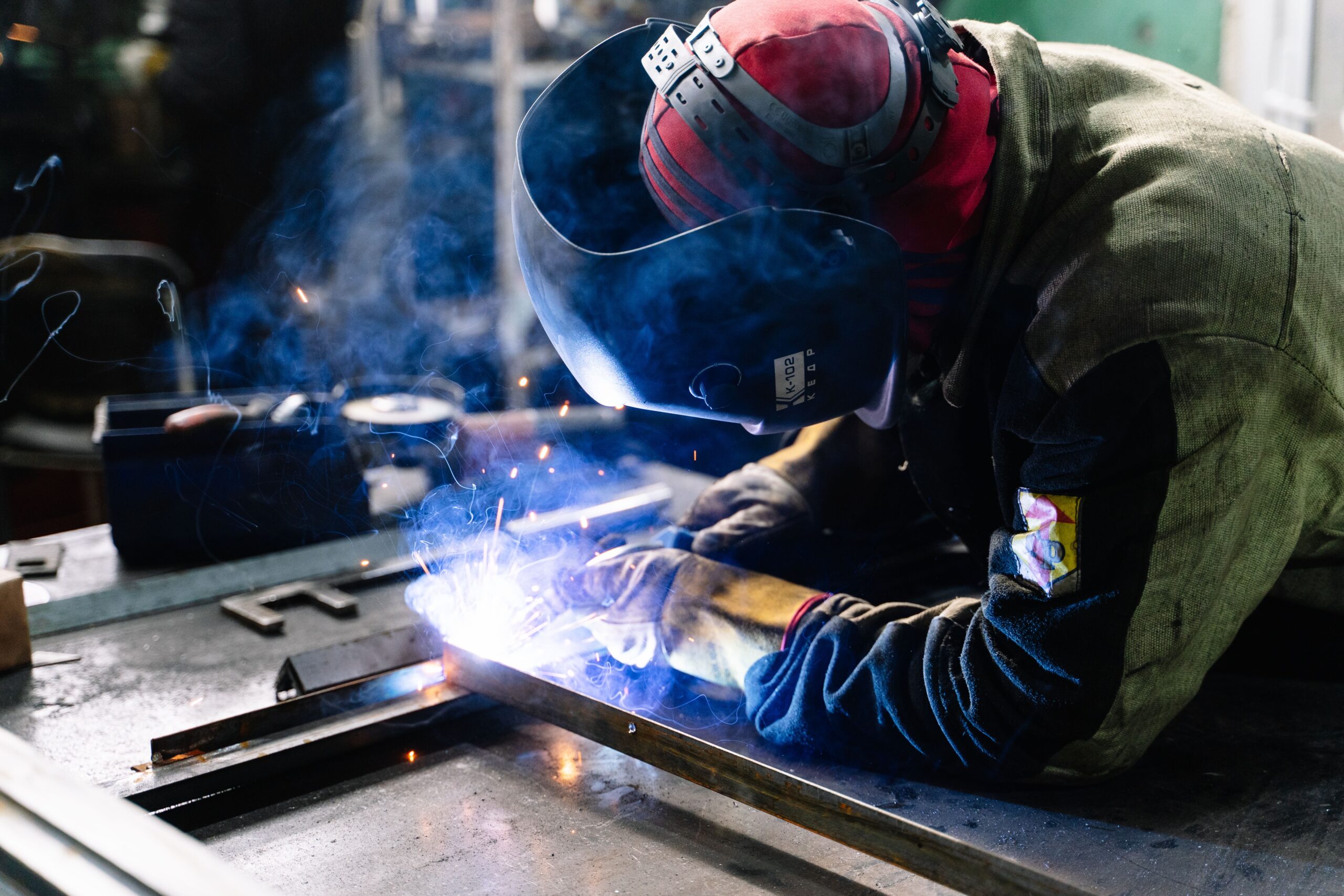
Germany continues to attract skilled workers from outside the European Union, particularly in practical trades like welding, where international professionals can find numerous opportunities. As of 2026, labor market research in Germany has identified ongoing shortages in several technical and metal-related occupations. According to KOFA, these shortages have notably increased in areas such as welding and joining technology, metalworking, metal construction, and machinery and plant engineering.
However, it’s important to note that not every welder in Germany automatically qualifies for a work visa, nor does every company sponsor overseas applicants. Unlike countries such as the United States, Germany does not operate a traditional “visa sponsorship” system. Instead, foreign workers typically need a qualifying job offer and must meet the requirements of an appropriate German residence title for employment.
Fortunately, Germany’s Skilled Immigration Act has expanded the pathways for skilled workers with vocational qualifications. Under certain conditions, individuals with substantial practical professional knowledge can also benefit from this legislation.
Currently, genuine welder vacancies are listed on Germany’s official job portal, “Make it in Germany.” Recent job listings have been found in various regions, including Bavaria, North Rhine-Westphalia, Saxony, and Lower Saxony.
If you are a qualified welder from Nigeria, Ghana, India, the Philippines, South Africa, or another non-EU country, this guide will explain how to search for job opportunities, identify recruiting employers, understand the required qualifications, navigate the German work visa process, and enhance your chances of receiving a job offer.
Why Germany Needs Skilled Welders in 2026
Welding is fundamental to Germany’s industrial economy.
The country has major industries involving:
- Automotive manufacturing
- Mechanical engineering
- Plant construction
- Railway manufacturing
- Pipeline construction
- Metal fabrication
- Construction
- Industrial equipment
- Energy infrastructure
- Shipbuilding
- Heavy machinery
- Manufacturing
These industries require workers capable of producing safe, accurate and durable welded structures.
The shortage is not simply theoretical.
Germany’s Federal Employment Agency reported 157 shortage occupations in its 2025 shortage analysis, with shortages particularly visible in construction and skilled trades.
More specifically, KOFA’s 2026 analysis reported that shortages increased in several metal and electrical occupations, including skilled workers in welding and joining technology.
This makes welding an occupation worth investigating for qualified international workers.
However, applicants should understand an important distinction:
A shortage of workers does not automatically guarantee a job, visa or employer sponsorship.
Employers still select candidates based on technical ability, experience, language skills, certifications and their specific production requirements.
What Does “Visa Sponsorship” Mean for Welders in Germany?
When job seekers search for “welder visa sponsorship jobs in Germany,” they usually mean a company willing to employ a foreign worker and support the immigration process.
Germany’s system is somewhat different.
A typical pathway looks like this:
Job offer → Employment/qualification assessment → Appropriate visa/residence permit → Entry into Germany → Work
The German Skilled Immigration Act has made immigration easier for certain qualified workers. The official government portal explains that the law expanded immigration possibilities for people with vocational training and also created additional routes for people with practical professional knowledge.
For some non-regulated occupations, a worker with a recognised vocational qualification may be able to obtain employment-based residence.
There is also a route for people with practical professional knowledge under specific conditions. According to the official government information, this route can apply to non-regulated professions across sectors where the applicant has a recognised vocational or academic qualification, at least two years of relevant professional experience and meets the applicable salary and other requirements.
Therefore, a better way to think about “visa sponsorship” in Germany is:
Find an employer willing to hire you, then determine which German immigration pathway your qualification and employment contract support.
Are Welders in Demand in Germany?
Yes, there are continuing shortages in parts of the welding and metalworking labour market.
KOFA’s March 2026 report specifically identified welding and joining technology among occupations where the skilled-worker gap increased.
At the same time, Germany’s labour market is not experiencing a shortage in every occupation or region.
The official Make it in Germany portal notes that Germany does not currently have a nationwide shortage across all occupations. Instead, shortages vary according to occupation, qualification level and region.
That distinction is important.
A qualified welder with several years of experience in industrial welding may have considerably better prospects than someone with only a short informal welding course.
Types of Welding Jobs Available in Germany
Foreign applicants should not search only for “welder.”
German employers use several job titles.
1. MAG Welder
MAG welding is widely used in industrial production and steel fabrication.
You may see vacancies advertised as:
MAG-Schweißer
or:
Schweißer MAG
2. MIG Welder
MIG welding is commonly used for aluminium and other applications.
Search terms include:
MIG-Schweißer
and:
MIG/MAG-Schweißer
3. TIG/WIG Welder
TIG welding requires precision and is used in applications involving pipes, stainless steel, aluminium and other materials.
German job advertisements often use:
WIG-Schweißer
or:
WIG/MAG-Schweißer
4. Pipe Welder
Pipe welding can be particularly relevant to:
- Pipeline construction
- Industrial plants
- Energy infrastructure
- Gas systems
- Water infrastructure
A recent official listing from SCHRAND GmbH sought welders experienced in pipeline welding using WIG, MAG and STT processes.
5. Structural Steel Welder
These welders work on:
- Steel structures
- Machinery
- Industrial components
- Construction structures
- Frames
- Heavy assemblies
6. Industrial Welder
Industrial welders can work in:
- Machinery manufacturing
- Plant engineering
- Automotive production
- Railway manufacturing
- Industrial fabrication
Companies and Employers Hiring Welders in Germany
The following employers and recruitment listings illustrate the kinds of opportunities currently available.
Important: A vacancy being listed in Germany does **not automatically mean that the employer will sponsor a non-EU worker’s visa. International applicants should confirm this directly with the employer and then check their eligibility for the appropriate residence permit.
1. KB Anlagenbau GmbH & Co. KG
KB Anlagenbau currently has a welder vacancy in Bad Oeynhausen, North Rhine-Westphalia.
The position involves plant and pipeline construction, including welding and assembly of pipelines, vessels and customised constructions.
The vacancy is full-time and open-ended. It was listed on the official Make it in Germany job portal in August 2026.
This type of vacancy may be particularly relevant to welders with experience in:
- Pipeline welding
- Plant construction
- Industrial assembly
- Technical drawings
- Metal fabrication
2. MPS Stollberg GmbH
MPS Stollberg GmbH has advertised a full-time, open-ended welder position in Stollberg/Erzgebirge, Saxony.
The vacancy includes welding plant and structural components.
The employer requested:
- Completed vocational training in the metal sector
- WIG/MAG welding knowledge
- Ability to read technical drawings
- Willingness to work shifts
- Valid welding qualifications as desirable
- Relevant professional experience as an advantage.
This is a useful example of what German employers may expect from skilled welders.
3. SCHRAND GmbH
SCHRAND GmbH advertised a welding position in Essen (Oldenburg), Lower Saxony.
The job involved welding underground pipelines.
The vacancy requested experience in pipeline welding and knowledge of the relevant welding processes.
The employer also indicated that a Class B driving licence was required and that the role involved assembly work.
For experienced pipe welders, this illustrates the value of combining welding skills with:
- Pipeline experience
- Technical drawing skills
- Driving ability
- Flexibility for site work
4. Bauer Maschinen und Technologie GmbH & Co. KG
Bauer Maschinen und Technologie GmbH & Co. KG advertised a welder position in Weilheim in Oberbayern, Bavaria.
The company works in mechanical engineering and machine and plant manufacturing.
The role involved demanding welding work on assemblies and was advertised as a full-time, open-ended position with shift, night and weekend work.
This kind of employer can be particularly interesting for welders with experience in:
- Mechanical engineering
- Heavy machinery
- Industrial fabrication
- Complex assemblies
5. hello jobs GmbH – Munich Welder Recruitment
A recent listing from hello jobs GmbH advertised a welder position near Munich, Bavaria, on behalf of a major manufacturer involved in rail vehicles, railway automation and electrification solutions.
The job involves welding structural steel assemblies using the MAG process.
Applicants were expected to work in different welding positions, including flat, horizontal and vertical positions.
This is an example of the type of international industrial sector where welding skills can be valuable.
6. hello jobs GmbH – Pipeline Welding
Another hello jobs listing sought experienced welders in Münster, North Rhine-Westphalia.
The position was advertised on behalf of a company involved in engineering, construction, maintenance and service of pipeline and cable networks.
The position specifically involved pipeline and construction-component welding using TIG or stick welding.
The listing also stated that applicants could communicate with the recruitment team in German, English or Croatian.
7. IKR GmbH
IKR GmbH has advertised a Welding Specialist position for pipeline and plant construction.
The vacancy was for Germany-wide full-time work and involved pipeline and plant engineering.
IKR stated that it operates as part of the international ERBUD Group and has around 270 direct employees plus additional external workers.
This particular role is more advanced than a basic welder position and may appeal to applicants with higher-level welding qualifications.
8. Franz & Wach Recruitment
Franz & Wach has advertised a MAG/WIG welder position in Baden-Württemberg for a customer in staircase construction.
The vacancy included:
- MAG and TIG welding
- Reading drawings
- Metal-part machining
- Quality inspection
- Full-time work
The employer requested good German language knowledge.
9. Siemens
Current German job-search results also show welding positions associated with Siemens, including a welder role in Munich involving steel construction.
Large industrial companies such as Siemens can be attractive to international applicants because of their scale and structured recruitment systems.
However, applicants should check each vacancy individually for:
- Location
- Language requirement
- Qualification requirements
- Work authorisation
- Whether international applications are accepted
10. Rocket Factory Augsburg
Rocket Factory Augsburg has appeared in current German welder job searches for a welder role in Augsburg.
The advertised position sought experience with stainless steel, aluminium, titanium or other non-ferrous metals and involved high-precision manufacturing.
This demonstrates another important point:
Not all German welding jobs are traditional construction jobs.
Advanced manufacturing and aerospace-related production can also require highly skilled welders.
11. STIEBEL ELTRON
STIEBEL ELTRON has also appeared in current German welding job searches, with a welder position in Holzminden.
The company describes itself as having more than 5,000 employees and offers employment in technical manufacturing environments.
The position can be relevant to welders with formal skilled-trade training.
What Qualifications Do German Employers Want?
One of the clearest lessons from current vacancies is that employers are looking for demonstrable technical competence.
Common requirements include:
Formal vocational training
Many employers prefer a completed metalworking or welding-related apprenticeship.
MPS Stollberg, for example, requested successfully completed vocational training in the metal sector.
Welding experience
Experience is especially valuable in:
- MAG
- MIG
- TIG/WIG
- Stick welding
- Pipe welding
- Structural steel
Technical drawing
The ability to understand engineering drawings can significantly improve employability.
Welding certificates
Valid welding tests or qualifications can strengthen an application.
Quality control
Industrial employers need welders who understand:
- Welding standards
- Inspection
- Defects
- Quality assurance
- Workplace safety
Flexibility
Some positions require:
- Shift work
- Night work
- Weekend work
- Travel
- Site assignments
Welding Certifications That Can Help
International welders should consider obtaining recognised qualifications relevant to their specific welding process.
Depending on your career level, employers may value qualifications associated with standards such as:
- ISO welding standards
- EN welding standards
- Process-specific certifications
- Welder qualification tests
The exact certificate required depends on the job.
Do not assume that one welding certificate automatically qualifies you for every German welding position.
Do You Need German Language Skills?
German language requirements vary considerably.
Some technical employers may accept English-speaking candidates, particularly where the company has international operations.
However, many production environments require German because workers must understand:
- Safety instructions
- Technical documentation
- Workplace communication
- Quality requirements
- Machinery instructions
For example, a recent MAG/WIG vacancy from Franz & Wach specifically requested very good German.
Other vacancies may have more flexible language requirements.
Recommended target
If you are outside Germany, learning at least A2–B1 German can make you considerably more competitive.
For industrial jobs involving safety-critical work, stronger German can be an important advantage.
Germany Welder Salary Expectations
Welder salaries vary according to:
- Qualification
- Experience
- Welding process
- Industry
- Region
- Shift work
- Overtime
- Collective agreement
- Employer
Applicants should be careful with websites promising a universal salary figure.
A highly experienced pipe welder working on specialised industrial projects may earn considerably more than an entry-level production welder.
Some vacancies also include:
- Shift allowances
- Overtime
- Travel allowances
- Bonuses
- Accommodation support
- Meal allowances
- Other benefits
For example, the SCHRAND listing mentioned above offered above-tariff pay and additional benefits.
Can a Welder From Nigeria Get a German Work Visa?
Potentially, yes.
Germany has expanded routes for qualified workers from non-EU countries.
The Skilled Immigration Act has made it easier in some cases for people with vocational training and practical professional experience to immigrate for employment.
But your eligibility depends on your:
- Qualification
- Work experience
- Job offer
- Salary
- Recognition or comparability requirements
- German language situation where applicable
- Specific residence pathway
You should never assume that receiving a job offer automatically guarantees a visa.
Recognition of Welding Qualifications
Recognition can be an important part of the immigration process.
If you have a vocational welding qualification from Nigeria, Ghana, India or another country, Germany may need to determine whether it corresponds to a German qualification.
The requirements depend on the immigration route.
Under some Skilled Immigration Act pathways, formal German recognition may not be required in exactly the same way, particularly for people qualifying through the practical professional knowledge route. The official government portal explains that this route can apply to non-regulated professions where the applicant meets specified qualification, experience and salary conditions.
Nevertheless, recognition or an assessment of your qualification can still be extremely useful.
It can help:
- Employers understand your training
- Authorities assess your eligibility
- You identify qualification gaps
- You improve your employment prospects
Documents Welders Should Prepare Before Applying
Create a professional document package.
You should normally prepare:
- Passport
- Detailed CV
- Welding certificates
- Vocational training certificate
- Academic certificates where applicable
- Employment reference letters
- Evidence of work experience
- Welding test certificates
- Technical training records
- Driving licence if relevant
- German language certificate if available
- Portfolio or evidence of major projects
Keep digital PDF copies.
How to Write a German Welder CV
Your CV should be clear and technical.
Personal Information
Name
Location
Phone
Email
Nationality
Work authorisation status
Professional Summary
Example:
Certified welder with 7 years of industrial experience in MAG, TIG/WIG and structural steel welding. Experienced in reading technical drawings, preparing metal components, quality inspection and working in production environments. Seeking a long-term welding position in Germany.
Technical Skills
List specific skills:
- MAG welding
- TIG/WIG welding
- MIG welding
- Pipe welding
- Structural steel
- Stainless steel
- Aluminium
- Technical drawings
- Welding inspection
- Grinding
- Cutting
- Fabrication
Work Experience
Use measurable information where possible.
Instead of:
Worked as a welder.
Write:
Performed MAG welding on structural steel assemblies, interpreted fabrication drawings, prepared joints and conducted visual quality checks.
How to Find Welder Jobs in Germany From Abroad
Use Make it in Germany
The official government portal has a job board specifically designed for international professionals.
Search:
Schweißer
Welder
MAG Schweißer
WIG Schweißer
MIG Schweißer
Rohrschweißer
Schweißfachmann
Schweißtechniker
Metallbauer
The official portal currently contains multiple welder vacancies, including several published in 2026.
Search Terms to Use
Try these searches:
Schweißer Stellenangebote Deutschland
Schweißer Jobs mit Unterkunft
MAG Schweißer Deutschland
WIG Schweißer Deutschland
Rohrschweißer Jobs Deutschland
Schweißer Fachkraft Deutschland
How to Apply From Nigeria or Another Non-EU Country
The process can be broken down into several stages.
Step 1: Get Your Documents Ready
Do this before applying.
Step 2: Search for Suitable Vacancies
Focus on jobs that match your exact welding process and experience.
Step 3: Submit Your CV
Use a professional CV and cover letter.
Step 4: Interview
You may have a video interview.
Be prepared to answer technical questions.
Step 5: Receive an Employment Offer
If selected, obtain a written contract or binding job offer.
Step 6: Determine Your Immigration Route
Check which residence title applies.
Step 7: Complete Visa Application
Apply through the appropriate German diplomatic mission.
Step 8: Travel to Germany
Once the visa or residence authorisation is approved, you can make your travel arrangements.
What Employers May Ask During a Welder Interview
Prepare for questions such as:
- Which welding processes can you use?
- How many years of experience do you have?
- Can you weld stainless steel?
- Can you weld aluminium?
- Have you worked with pressure pipes?
- Can you read technical drawings?
- What welding positions can you perform?
- Do you have valid welding certificates?
- Are you comfortable with shift work?
- Can you work overtime?
- Do you speak German?
- Have you worked according to EN or ISO standards?
- Can you relocate?
You should be able to discuss your actual experience confidently.
How to Increase Your Chances of Getting Hired
Learn German
Even basic German can help.
Get Your Welding Certificates Updated
Expired certificates can weaken an application.
Specialise
A welder who can demonstrate specialised skills may stand out.
Consider developing expertise in:
- Pipe welding
- Stainless steel
- Aluminium
- TIG/WIG
- MAG
- Pressure vessels
- Industrial plant construction
Obtain a Driving Licence
Some jobs require or prefer a driving licence.
The SCHRAND vacancy, for example, required at least a Class B licence.
Build Industrial Experience
Manufacturing and plant-construction experience can be highly valuable.
What About Accommodation?
Some employers or recruitment agencies may offer:
- Accommodation
- Assistance finding accommodation
- Temporary housing
- Relocation support
But this is not guaranteed.
Always ask:
“Is accommodation provided, subsidised or arranged by the employer?”
Also ask whether the cost will be deducted from your salary.
Beware of Welder Job Scams
This is especially important for applicants applying from Africa.
Be cautious if someone says:
“Pay €5,000 and your German visa is guaranteed.”
There is no legitimate agent who can guarantee a German work visa simply because you paid money.
Warning signs include:
- Guaranteed visa claims
- Fake employment contracts
- Pressure to transfer money immediately
- No company website
- No verifiable employer
- Requests to pay into personal bank accounts
- Fake embassy documents
- Unusually high salaries for basic jobs
- No interview
- No technical assessment
Use official German government resources whenever possible.
Do You Need an Agent?
No.
You can apply directly to employers.
An immigration lawyer or legitimate relocation professional can sometimes help with complex cases, but you do not need an agent merely to search for jobs.
In fact, direct applications can reduce the risk of fraudulent recruitment.
Welder Visa Sponsorship Jobs in Germany for Nigerians
Nigerian welders should focus on demonstrating three things:
1. Professional qualification
Show your welding training clearly.
2. Practical experience
Provide employment references and evidence of actual welding work.
3. Immigration readiness
Have your passport, qualification documents, certificates and language documentation organised.
If your documents are not in German or another accepted language, you may need certified translations depending on the specific application.
Can an Entry-Level Welder Get a German Work Visa?
This can be difficult.
Germany’s skilled-worker immigration pathways generally favour people with recognised or qualifying vocational training, relevant professional experience and a genuine job offer.
Someone who completed a short informal welding course with little practical experience should not assume they qualify for a skilled-worker residence permit.
A stronger profile would include:
- Formal vocational training
- Several years of experience
- Welding certifications
- Technical drawing skills
- German language ability
- Strong employer reference
Can Welders Use the Opportunity Card?
Germany’s Opportunity Card (Chancenkarte) is another pathway that can allow eligible third-country nationals to come to Germany to look for employment.
The Skilled Immigration Act introduced the Opportunity Card as part of Germany’s expanded immigration framework.
However, eligibility is not automatic for every welder.
Applicants must meet the applicable qualification, language, financial and other requirements.
For someone who already has a German job offer, an employment-based route may be more straightforward.
Welder vs Welding Specialist
There is a major difference.
A standard welder may perform welding operations.
A welding specialist or welding supervisor may have responsibilities involving:
- Welding procedures
- Quality systems
- Standards
- Inspection
- Documentation
- Supervision
- Production planning
The IKR GmbH listing for a welding specialist illustrates the higher level of responsibility associated with this career path.
Experienced welders can therefore consider progressing into:
- Welding specialist
- Welding supervisor
- Welding inspector
- Welding technician
- Fabrication supervisor
These positions can open additional career opportunities.
Best German Regions to Search for Welding Jobs
Do not restrict yourself to Berlin.
Industrial opportunities can exist in regions such as:
Bavaria
Major manufacturing and engineering ecosystem.
Current listings include welder positions in the Munich and Weilheim areas.
North Rhine-Westphalia
Strong industrial and manufacturing base.
Recent welder vacancies have appeared in Bad Oeynhausen and Münster.
Lower Saxony
Pipeline and industrial employers operate across the region.
Saxony
Manufacturing and industrial companies offer technical employment opportunities.
MPS Stollberg’s current welder vacancy is one example.
Baden-Württemberg
Strong engineering and manufacturing economy.
Recent MAG/WIG recruitment has been advertised in the region.
Frequently Asked Questions
Are there welder visa sponsorship jobs in Germany in 2026?
Yes, German employers are advertising welder vacancies in 2026, including positions in manufacturing, plant construction, pipeline construction and industrial production. However, applicants must separately establish whether a particular employer will hire and support a non-EU worker through the relevant immigration process. Current vacancies are visible on the official Make it in Germany job portal.
Can foreign welders work in Germany?
Yes. Qualified workers from outside the EU can potentially work in Germany if they meet the requirements of an appropriate immigration pathway.
Is welding in shortage in Germany?
There are documented shortages in welding and joining technology occupations. KOFA reported increased shortages in these occupations in 2026.
Do I need German to work as a welder?
Not every vacancy has the same language requirement, but German can be a major advantage. Some vacancies specifically require strong German.
Can a Nigerian welder apply for jobs in Germany?
Yes. Nigerian citizens can apply for German jobs and, if they receive a suitable offer and meet the immigration requirements, may apply for the relevant work visa or residence title.
What welding processes are most useful?
MAG, MIG and TIG/WIG are particularly useful, but the best process depends on the employer and industry.
Do German employers require welding certificates?
Many employers prefer or require formal welding qualifications or valid welding tests. Requirements vary by vacancy.
Is MEXT-style sponsorship available for welders?
No. MEXT is a Japanese scholarship programme and is unrelated to German employment. German welders generally use employment-based immigration routes.
Can I get a German work visa without a job offer?
Some immigration pathways, including the Opportunity Card, can allow eligible applicants to enter Germany to seek employment. Eligibility requirements apply.
Does every welder qualify for the EU Blue Card?
No. The EU Blue Card is primarily an academic/high-skilled route with specific qualification and salary requirements. A standard welder should investigate the skilled-worker and other applicable employment routes instead. The official 2026 Blue Card salary thresholds are €50,700 generally and €45,934.20 for qualifying shortage occupations, subject to the applicable rules.
How much experience should I have?
There is no universal number for every vacancy. However, several years of practical experience can make your application much stronger, especially for specialised welding jobs.
Final Thoughts
Welder visa sponsorship jobs in Germany in 2026 present an excellent opportunity for qualified international tradespeople, especially those with formal training, several years of industrial experience, and recognized welding skills.
The demand for welders is supported by documented shortages in welding and joining technology, metal construction, and related technical occupations. However, Germany’s labor market does not lack workers in every field, so applicants should focus on specific vacancies rather than assuming that every welder will be hired.
The most promising candidates will likely be those who can demonstrate experience in MAG, MIG, or TIG/WIG welding, possess technical drawing abilities, hold welding certifications, have industrial experience, and exhibit good workplace communication skills.
If you are applying from Nigeria or another non-EU country, it’s important not to limit your search to the phrase “visa sponsorship.” Instead, look for German job titles such as Schweißer, MAG-Schweißer, WIG-Schweißer, Rohrschweißer, and Schweißfachmann. Then, explore the immigration pathway supported by the actual job offer.
Most importantly, apply through legitimate employers and official channels. Germany’s official job portal, “Make it in Germany,” lists real welding vacancies, including current positions in Bavaria, North Rhine-Westphalia, Saxony, and other regions.
A strong CV, genuine experience, updated qualifications, and a willingness to learn German can significantly enhance your chances of securing a job.
Official Resources to Explore
Make it in Germany – Official Portal for International Skilled Workers